
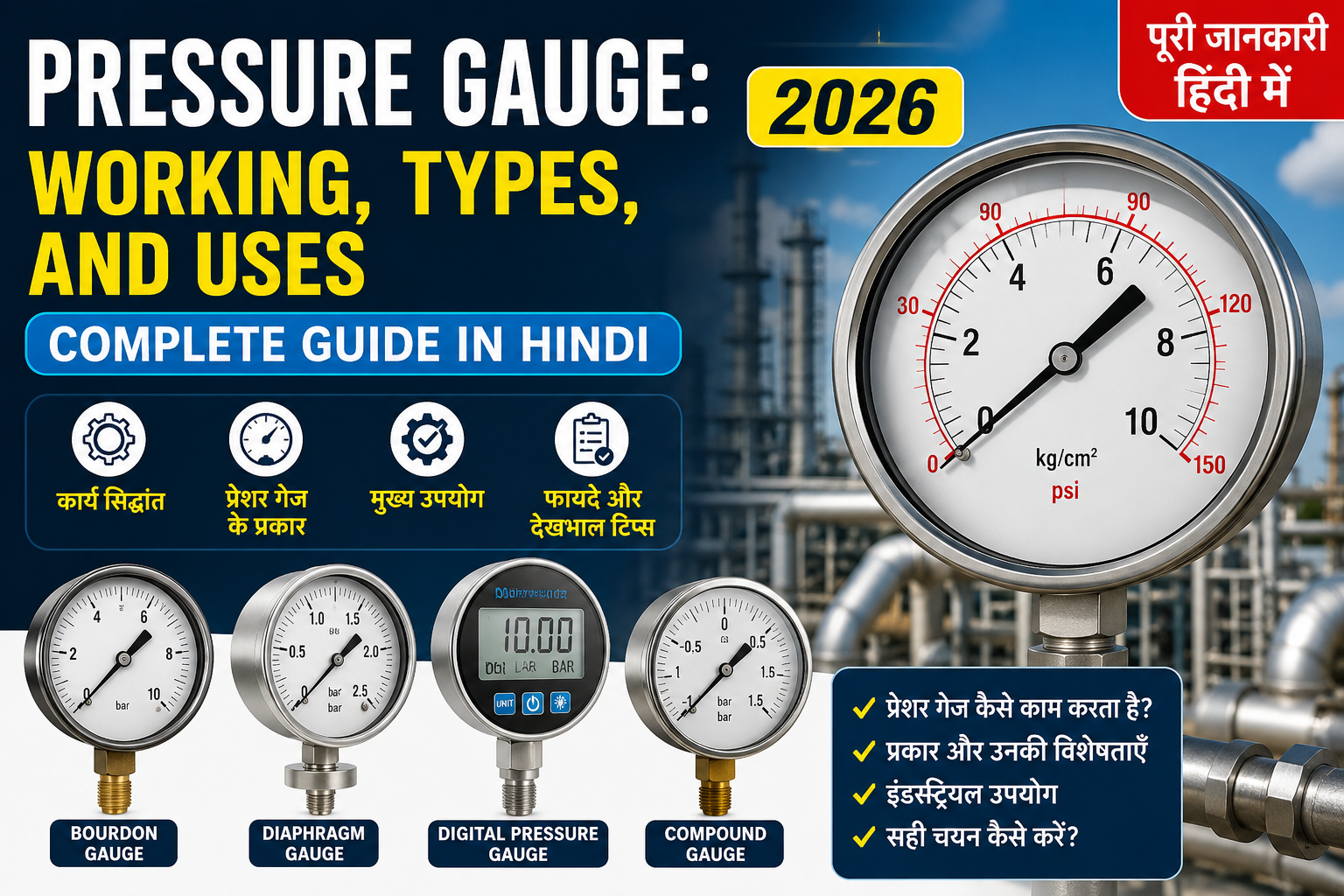
About of Pressure Gauges, About of Uses, About of Types and Working Principle Complete Guide In Hindi 2026
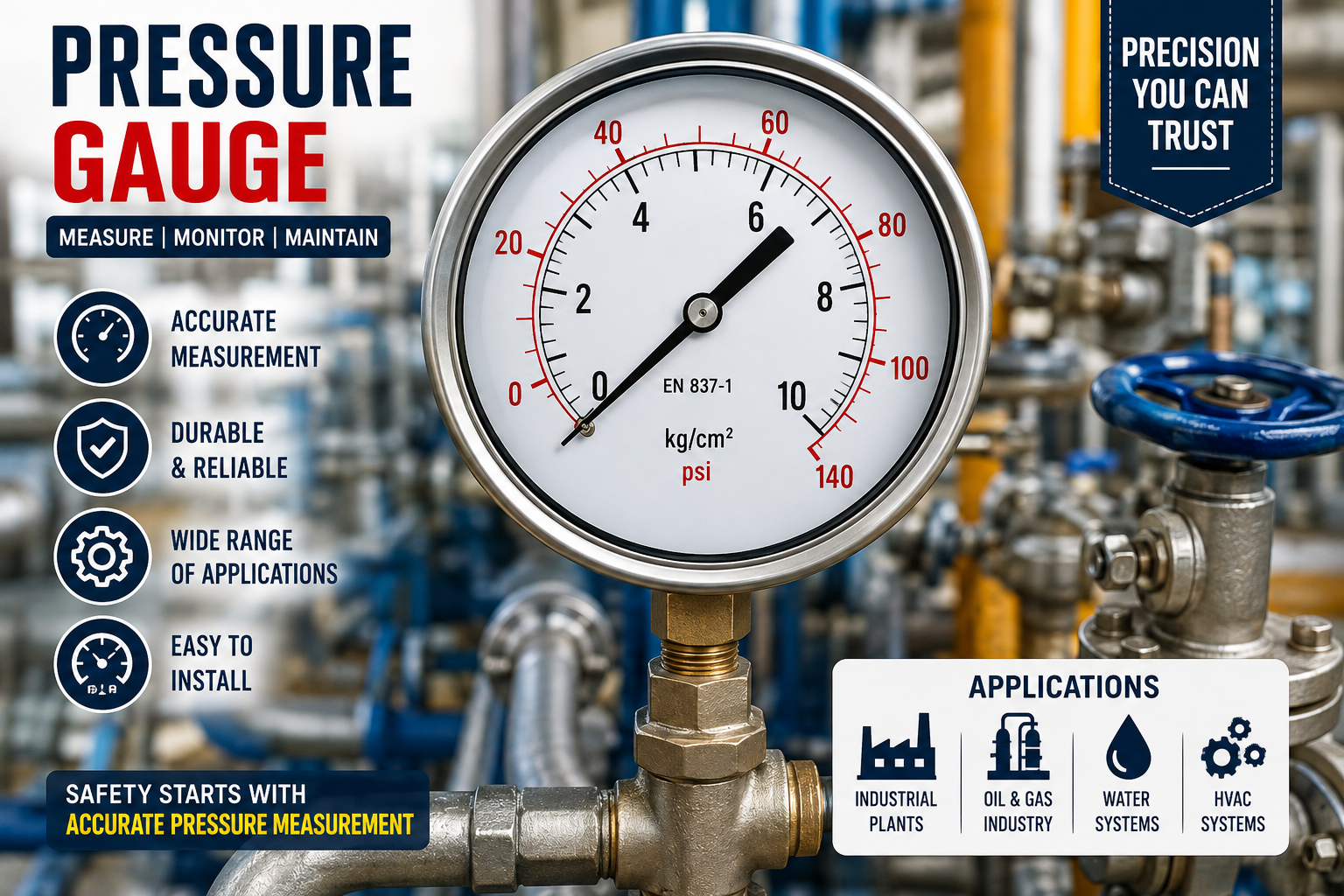
Pressure Gauge क्या है?
Working Principle, Types, Parts, Uses और सही Gauge चुनने की पूरी जानकारी औद्योगिक क्षेत्र में किसी भी मशीन या process को सुरक्षित और सही तरीके से चलाने के लिए pressure की निगरानी बहुत महत्वपूर्ण होती है। Boiler, compressor, pump, hydraulic system, pneumatic system, refrigeration plant और कई process industries में pressure को लगातार monitor किया जाता है। इसी काम के लिए सबसे अधिक इस्तेमाल होने वाले instruments में से एक है Pressure Gauge
Pressure Gauge एक ऐसा measuring instrument है जिसकी सहायता से किसी system में मौजूद pressure को सीधे dial या display पर देखा जा सकता है। इसकी मदद से operator को यह पता चलता रहता है कि किसी pipeline, vessel, pump या machine में pressure सामान्य सीमा के अंदर है या नहीं।
Mechanical pressure gauges में pressure के कारण sensing element में होने वाले छोटे mechanical movement को pointer की movement में बदला जाता है। Bourdon tube, diaphragm और capsule इसके प्रमुख sensing principles हैं। इस लेख में हम Pressure Gauge क्या है, यह कैसे काम करता है, इसके प्रमुख प्रकार, parts, applications, installation, maintenance और troubleshooting को आसान भाषा में समझेंगे।
Pressure Gauge एक mechanical या electronic instrument है जिसका उपयोग किसी fluid या gas के pressure को मापने के लिए किया जाता है।
यह pressure सामान्यत निम्न units में दिखाया जाता है:
bar, kg/cm², PSI kPa, MPa, mmHg, inHg
किसी gauge पर एक से अधिक units भी दी जा सकती हैं। उदाहरण के लिए किसी industrial gauge के dial पर bar और PSI दोनों scales दिखाई दे सकते हैं। Pressure Gauge का मुख्य उद्देश्य केवल pressure की value बताना नहीं है, बल्कि operator को process की condition के बारे में तत्काल जानकारी देना भी है।
उदाहरण के लिए:
यदि किसी compressor का normal discharge pressure 7 bar है और gauge अचानक 10 bar दिखाने लगे, तो यह blockage, valve problem या किसी अन्य process fault का संकेत हो सकता है। इसी तरह pressure अचानक कम हो जाए तो leakage, pump/compressor performance या supply problem की जांच आवश्यक हो सकती है।
Pressure Gauge Working Principle:
अधिकांश mechanical pressure gauges elastic deformation principle पर काम करते हैं। इसका मतलब है कि pressure लगने पर gauge के अंदर लगा sensing element थोड़ा deform या move होता है। इस छोटे movement को mechanical linkage और gear mechanism बढ़ाकर pointer की movement में बदल देते हैं। सबसे common example Bourdon Tube Pressure Gauge है।
Bourdon tube सामान्यतः curved metal tube होती है। जब tube के अंदर pressure बढ़ता है, तो उसके cross-section और shape में बहुत छोटा बदलाव आता है। इसके कारण tube का free end थोड़ा move करता है। यह movement linkage और gear mechanism तक पहुंचती है और अंत में dial पर लगा pointer घूमता है।
सरल रूप में इसका process इस प्रकार समझ सकते हैं:
Pressure → Sensing Element Movement → Link/Lever → Gear Mechanism → Pointer Movement → Pressure Reading
यही basic principle mechanical pressure gauges में pressure को readable indication में बदलता है।
प्रेशर गेज के मुख्य Parts:
एक सामान्य analog pressure gauge को समझने के लिए उसके प्रमुख parts जानना जरूरी है।
1. Dial:
Dial gauge का सामने वाला graduated face होता है। इस पर pressure की units और values लिखी होती हैं।
2. Pointer:
Pointer pressure की वर्तमान reading बताता है। Pressure बढ़ने या घटने के साथ pointer dial पर move करता है।
3. Bourdon Tube:
Bourdon-type gauge में यह मुख्य sensing element होता है। Process pressure इसी element पर कार्य करता है।
4. Socket या Process Connection:
यह वह हिस्सा है जिसके माध्यम से gauge को pipeline या equipment से जोड़ा जाता है।
5. Linkage:
Sensing element की छोटी movement को आगे mechanical mechanism तक पहुंचाने का काम linkage करता है।
6. Gear Mechanism:
Gear mechanism sensing element की छोटी movement को pointer की अधिक स्पष्ट rotational movement में बदलता है।
7. Case:
Case gauge के अंदर के mechanical parts को dust, moisture और mechanical damage से protection देता है।
8. Window:
Dial को देखने के लिए gauge के सामने transparent window होती है।
9. Blow-Out Protection:
कुछ industrial gauges में safety design के रूप में blow-out protection दिया जाता है। इसका उद्देश्य गंभीर internal failure की स्थिति में operator की तरफ pressure release होने के जोखिम को कम करना है।
प्रेशर गेज के प्रमुख प्रकार:
प्रेशर गेज को sensing element, pressure reference और application के आधार पर कई categories में समझा जा सकता है।
1. Bourdon Tube Pressure Gauge:
यह सबसे ज्यादा इस्तेमाल होने वाले mechanical pressure gauges में से एक है। इसमें एक curved metallic tube होती है। यह tube C-shape, spiral या helical design में हो सकती है। Pressure बढ़ने पर tube की shape में बदलाव आता है और free end move करता है। इस movement को pointer तक transfer किया जाता है।
उपयोग:
Compressor, Pump, Hydraulic system, Pneumatic system, Boiler auxiliaries , Industrial pipelines, Air receiver, Gas systems Bourdon gauge सामान्य clean liquids और gases के लिए बहुत उपयोगी है, लेकिन बहुत कम pressure या ऐसे media जिनसे gauge connection block हो सकता है, उनमें दूसरे sensing designs अधिक उपयुक्त हो सकते हैं।
2. Diaphragm Pressure Gauge:
Diaphragm gauge में Bourdon tube की जगह flexible diaphragm sensing element के रूप में काम करता है। जब diaphragm के एक side पर pressure लगाया जाता है तो diaphragm deflect होता है। इस movement को mechanical mechanism द्वारा pointer movement में बदल दिया जाता है। Diaphragm design उन applications में उपयोगी हो सकता है जहां process medium viscous, contaminated, corrosive या clogging tendency वाला हो, बशर्ते diaphragm material process के साथ compatible हो।
उपयोग:
Chemical industries, Wastewater systems, Slurry applications, Viscous fluids, Low-pressure applications, Corrosive media के लिए suitable diaphragm arrangements
3. Capsule प्रेशर गेज:
Capsule gauge में दो flexible diaphragms को जोड़कर एक capsule जैसा sensing element बनाया जाता है। यह design बहुत कम pressure को measure करने के लिए उपयोगी होता है। Capsule gauges विशेष रूप से low-pressure dry gases और air applications में इस्तेमाल किए जाते हैं। Liquids के लिए इनका उपयोग सामान्यतः उपयुक्त नहीं माना जाता।
उपयोग:
Air handling systems, Ventilation systems, Low-pressure gas systems, Filter monitoring, Laboratory applications
4. Bellows प्रेशर गेज:
Bellows एक flexible, folded metallic element होता है जो pressure difference के कारण expand या contract करता है। Bellows arrangement छोटे pressure differences को detect करने के लिए उपयोगी हो सकता है। इसके movement को mechanical linkage के माध्यम से indication में बदला जा सकता है।
5. Differential प्रेशर गेज:
Differential Pressure Gauge दो अलग-अलग pressure points के बीच का difference measure करता है। मान लीजिए किसी filter के inlet पर pressure 5 bar है और outlet पर 4 bar है।
तो:
Differential Pressure = 5 − 4 = 1 bar
इस प्रकार का measurement filter choking, flow monitoring और equipment condition जानने में उपयोगी होता है।
उपयोग:
Air filters, Oil filters, Pumps, Flow measurement systems, HVAC systems, Process equipment
6. Absolute प्रेशर गेज:
Absolute pressure gauge pressure को vacuum reference के मुकाबले measure करता है। इसमें atmospheric pressure को reference नहीं माना जाता। यह उन applications में उपयोगी होता है जहां absolute pressure महत्वपूर्ण होता है।
7. Vacuum प्रेशर गेज:
जब system pressure atmospheric pressure से कम होता है, तो vacuum measurement की आवश्यकता होती है। Vacuum gauge negative pressure या vacuum level indicate कर सकता है, depending on the selected scale and reference.
8. Digital प्रेशर गेज:
Digital pressure gauge में pressure को electronic sensing element द्वारा detect करके digital display पर दिखाया जाता है। इसके कई models में additional features जैसे peak value, data logging या electrical communication भी उपलब्ध हो सकते हैं। Digital gauges वहां उपयोगी होते हैं जहां numerical reading को आसानी से पढ़ना और अधिक सुविधाओं के साथ monitor करना आवश्यक हो। Gauge Pressure, Absolute Pressure और Differential Pressure में अंतर , Pressure measurement में reference बहुत महत्वपूर्ण होता है।
गेज प्रेशर:
Gauge pressure atmospheric pressure को reference मानकर pressure बताता है।
उदाहरण:
यदि gauge 5 bar दिखा रहा है, तो यह सामान्यतः atmospheric pressure के ऊपर का pressure बताता है।
Absolute Pressure:
Absolute pressure का reference ideal vacuum होता है।
इसलिए:
Absolute Pressure = Gauge Pressure + Atmospheric Pressure
उदाहरण के लिए समुद्र तल के आसपास atmospheric pressure लगभग 1 bar के आसपास माना जाए और gauge pressure 5 bar हो, तो absolute pressure लगभग 6 bar होगा।
Differential Pressure:
यह दो pressure points के बीच का अंतर बताता है।
DP = High Pressure − Low Pressure
यह principle filters, flow systems और process equipment monitoring में बहुत महत्वपूर्ण है।
◊ गेज का उपयोग कहां किया जाता है :
-
प्रेशर गेज लगभग हर उस industry में देखा जा सकता है जहां pressure वाला process मौजूद है।
-
Power plant में water, steam, air, oil और hydraulic systems के pressure monitoring के लिए gauges लगाए जाते हैं।
- Boiler और उससे जुड़े auxiliary systems में विभिन्न pressure points पर gauges लगाए जा सकते हैं।
- Compressor में suction और discharge pressure की monitoring के लिए pressure gauges लगाए जाते हैं।
- Hydraulic machines में oil pressure की monitoring अत्यंत महत्वपूर्ण होती है।
- Pneumatic System Compressed-air systems में receiver, regulator और pipeline pressure देखने के लिए gauge का उपयोग किया जाता है।
- Refrigeration और HVAC Refrigeration systems में अलग-अलग pressure points को monitor करने के लिए pressure measuring instruments का उपयोग होता है।
- Chemical Industry Chemical plants में process pressure की monitoring के लिए application के अनुसार Bourdon, diaphragm या diaphragm-seal arrangements इस्तेमाल किए जा सकते हैं।
प्रेशर गेज चुनते समय किन बातों का ध्यान रखें?:
केवल dial पर लिखी pressure range देखकर gauge खरीदना सही तरीका नहीं है।
Gauge select करते समय निम्न factors पर ध्यान देना चाहिए:
1. Pressure Range Normal operating pressure और maximum pressure दोनों को ध्यान में रखना चाहिए। बहुत कम range वाला gauge लगातार high pressure में लगाया जाए तो damage हो सकता है। दूसरी ओर बहुत बड़ी range चुनने से normal operating pressure पर reading की resolution कम हो सकती है।
2. Process Medium यह पता होना चाहिए कि gauge में कौन-सा fluid या gas आएगा। Water, air, steam, oil और corrosive chemicals के लिए material selection अलग हो सकता है।
3. Temperature High-temperature process में सामान्य gauge सीधे install करना उचित नहीं हो सकता। Suitable installation arrangement की आवश्यकता पड़ सकती है।
4. Vibration Compressor, reciprocating pump या vibrating machinery के पास gauge लगाने पर pointer fluctuation और mechanical wear हो सकता है। ऐसे applications में suitable vibration-resistant या liquid-filled design पर विचार किया जा सकता है।
5. Pulsation यदि pressure लगातार तेजी से बढ़ता-घटता है, तो gauge पर excessive mechanical stress पड़ सकता है। ऐसी स्थिति में suitable damping arrangement उपयोगी हो सकता है।
6. Material Compatibility Gauge का wetted material process fluid के साथ chemically compatible होना चाहिए।
प्रेशर गेज की Installation:
Gauge को सही तरीके से install करना भी उतना ही महत्वपूर्ण है जितना सही gauge select करना।
Installation के समय:
1. Gauge को सही pressure range वाला चुनें।
2. Process connection का thread सही होना चाहिए।
3. Gauge को mechanical force देकर pipe में tighten नहीं करना चाहिए।
4. Suitable sealing method का उपयोग करें।
5. High-temperature application में appropriate protection arrangement रखें।
6. Vibrating equipment पर suitable mounting arrangement का उपयोग करें।
7. Gauge को ऐसी जगह लगाएं जहां operator reading आसानी से देख सके।
8. Gauge को accidental mechanical damage से बचाएं।
गलत installation के कारण सही gauge भी जल्दी खराब हो सकता है या गलत reading दे सकता है।
Pressure Gauge में होने वाली सामान्य Problems:
Pointer Zero पर नहीं आता यदि system pressure हटाने के बाद भी pointer zero पर वापस नहीं आता, तो gauge में mechanical problem, overload या calibration issue हो सकता है।
Reading Fluctuate करती है इसके कई कारण हो सकते हैं:
Process pressure fluctuation, Pump pulsation, Compressor vibration, Loose connection, Internal mechanical problem
Gauge Pressure कम दिखा रहा है:
संभावित कारण: Leakage, Blocked pressure line, Wrong gauge range, Calibration problem, Process pressure वास्तव में कम होना
Gauge अचानक High Pressure दिखाता है:
संभावित कारण:
Blockage, Valve problem, Regulator failure, Actual overpressure, Process disturbance
इस स्थिति में केवल gauge को बदल देना पर्याप्त नहीं है; पहले process condition की जांच करना आवश्यक है।
Pressure Gauge की Maintenance:
Pressure gauge को लंबे समय तक reliable रखने के लिए periodic inspection जरूरी है।
Maintenance में निम्न checks किए जा सकते हैं:
Pointer movement check, Zero position check, Dial और window inspection, Leakage inspection, Process connection inspection, Corrosion inspection, Calibration verification, Vibration check, Pressure line blockage check
यदि gauge safety-critical application में लगा है, तो calibration और inspection का interval plant procedure तथा applicable standards के अनुसार निर्धारित करना चाहिए।
Pressure Gauge की Calibration क्यों जरूरी है?:
समय के साथ mechanical wear, overload, temperature और operating conditions के कारण gauge की indication में error आ सकता है Calibration में gauge की reading को एक known reference pressure source के साथ compare किया जाता है।
उदाहरण के लिए:
यदि reference device 5.00 bar pressure दे रहा है और test gauge 5.30 bar दिखा रहा है, तो दोनों readings में difference है। ऐसे deviation को acceptable tolerance के साथ evaluate किया जाता है। Calibration के लिए pressure calibrator या suitable reference standard का उपयोग किया जा सकता है।
Pressure Gauge के फायदे:
Pressure gauge के कई महत्वपूर्ण फायदे हैं Simple construction, आसानी से local reading, External electrical supply की आवश्यकता नहीं, mechanical gauges में , Industrial environments में उपयोगी, कई pressure ranges में उपलब्ध, Installation relatively simple, Maintenance सामान्यतः आसान, अलग-अलग process media के लिए विभिन्न designs उपलब्ध इसी कारण modern electronic pressure transmitters के बावजूद mechanical pressure gauges आज भी industrial plants में बहुत महत्वपूर्ण हैं।
Pressure Gauge की Limitations:
इसके कुछ limitations भी हैं:
- Mechanical parts wear हो सकते हैं।
- Vibration reading को प्रभावित कर सकती है।
- Overpressure sensing element को damage कर सकता है।
- बहुत low pressure applications के लिए सामान्य Bourdon gauge suitable नहीं हो सकता।
- गलत material selection से corrosion हो सकता है।
- Dirty या viscous media में suitable protection के बिना blockage हो सकता है।
- Periodic calibration/verification की आवश्यकता application पर निर्भर करती है।
निष्कर्ष:
Pressure Gauge एक छोटा लेकिन industrial process में अत्यंत महत्वपूर्ण measuring instrument है। इसकी मदद से operator किसी machine या process में pressure की स्थिति को तुरंत समझ सकता है। Bourdon tube gauge general industrial applications में बहुत लोकप्रिय है, जबकि diaphragm gauge विशेष media और low-pressure applications में उपयोगी हो सकता है। Capsule gauge बहुत कम gas pressure के लिए और bellows arrangement छोटे pressure differences के लिए उपयोगी हो सकता है। Digital pressure gauges electronic measurement और additional features के लिए इस्तेमाल किए जाते हैं।
याद रखें: सही pressure reading केवल एक number नहीं है – यह किसी पूरी machine या process की health का महत्वपूर्ण संकेत हो सकती है।