
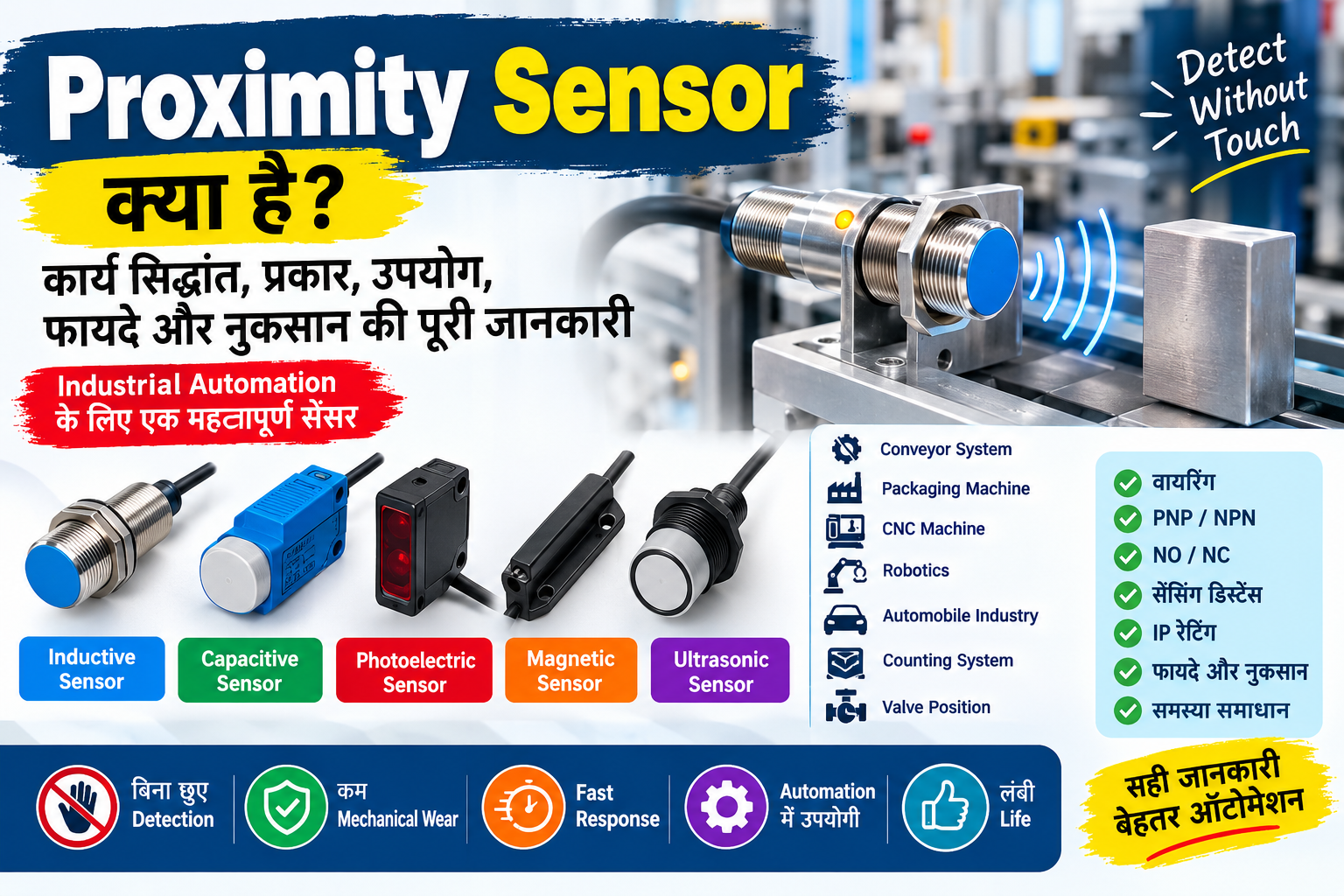
Proximity Sensor ऑटोमेशन सिस्टम में Sensor का महत्व लगातार बढ़ता जा रहा है। किसी मशीन को अपने आसपास मौजूद वस्तु की जानकारी देना, उसकी स्थिति पहचानना या बिना छुए किसी वस्तु की उपस्थिति का पता लगाना हो, तो सेंसर बहुत महत्वपूर्ण भूमिका निभाते हैं। इन्हीं सेंसर में से एक महत्वपूर्ण सेंसर है।
Proximity Sensor ऐसा इलेक्ट्रॉनिक सेंसर है जो किसी वस्तु को बिना उसे छुए Detect कर सकता है। इसका उपयोग Automation, Manufacturing Plant, Conveyor System, Packaging Machine, CNC Machine, Robotics, Automobile Industry और कई प्रकार की Industrial Machines में किया जाता है।
इस लेख में हम जानेंगे कि Proximity Sensor क्या है, यह कैसे काम करता है, इसके कितने प्रकार होते हैं, Wiring कैसे की जाती है, इसके फायदे और नुकसान क्या हैं तथा Industrial Automation में इसका उपयोग कहाँ किया जाता है।
Proximity Sensor क्या है?:
Proximity Sensor एक ऐसा sensor है जो अपने sensing range के अंदर किसी object की मौजूदगी या अनुपस्थिति का पता लगाता है, बिना उस object को physically touch किए।
सरल भाषा में समझें तो अगर किसी मशीन में एक metal object आगे आ रहा है और हमें पता लगाना है कि वह निर्धारित position तक पहुँच गया है या नहीं, तो वहाँ proximity sensor लगाया जा सकता है।
जब object sensor की sensing range में आता है, तो sensor अपना output बदल देता है। यह output PLC, relay, counter या किसी दूसरे control system को दिया जा सकता है।
उदाहरण के लिए:
Object → Proximity Sensor → PLC Input → Control Logic → Machine Action
इस प्रकार proximity sensor Industrial Automation में Object Detection और Position Detection का काम करता है।
Proximity Sensor कैसे काम करता है?:
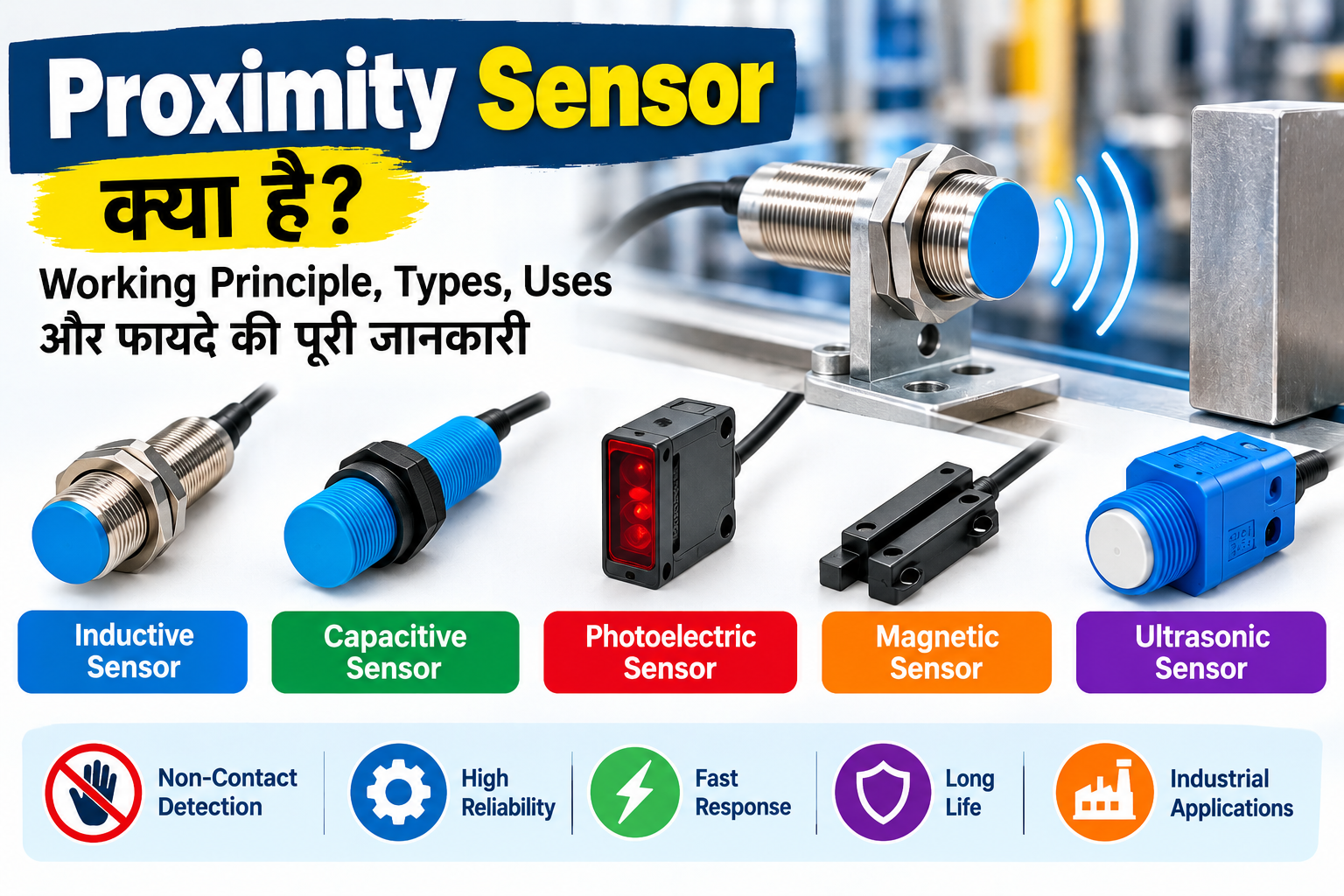
Proximity Sensor का working principle उसके प्रकार पर निर्भर करता है। अलग-अलग proximity sensors अलग physical principles का उपयोग करते हैं।
उदाहरण के लिए:
- Inductive sensor electromagnetic field का उपयोग करता है।
- Capacitive sensor capacitance में बदलाव detect करता है।
- Photoelectric sensor light का उपयोग करता है।
- Magnetic proximity sensor magnetic field को detect करता है।
- Ultrasonic sensor sound waves का उपयोग करता है।
जब कोई object sensor के sensing area में आता है, तो sensor के अंदर मौजूद sensing circuit में परिवर्तन होता है। Electronics उस परिवर्तन को process करके output signal generate करता है। Industrial applications में यह output PLC के Digital Input में भेजा जा सकता है।
Proximity Sensor के मुख्य भाग:
एक सामान्य proximity sensor में कई महत्वपूर्ण components होते हैं। Sensor के प्रकार के अनुसार internal construction अलग हो सकती है।
मुख्य भाग इस प्रकार हैं:
- 1. Sensing Element यह sensor का वह हिस्सा है जो object की presence को detect करता है।
- 2. Electronic Circuit यह sensing element से प्राप्त signal को process करता है।
- 3. Oscillator विशेषकर inductive proximity sensor में oscillator electromagnetic field बनाने में महत्वपूर्ण भूमिका निभाता है।
- 4. Amplifier Sensor से प्राप्त छोटे signal को suitable level तक amplify करने के लिए amplifier circuit का उपयोग किया जाता है।
- 5. Output Circuit यह final signal को PLC, relay या controller तक भेजता है।
- 6. Sensor Housing पूरे electronic circuit को mechanical damage, dust और moisture से बचाने के लिए housing दी जाती है।
Proximity सेंसर के प्रकार:
Proximity Sensor कई प्रकार के होते हैं। इनमें से कुछ प्रमुख प्रकार निम्न हैं:
1. Inductive Proximity Sensor
Inductive Proximity Sensor Industrial Automation में बहुत ज्यादा इस्तेमाल होने वाला sensor है। यह मुख्य रूप से metal objects को detect करने के लिए उपयोग किया जाता है। यह electromagnetic field के principle पर काम करता है।
जब कोई metal object sensor के sensing area में आता है, तो sensor द्वारा उत्पन्न electromagnetic field में परिवर्तन होता है। Internal electronic circuit इस बदलाव को detect करता है और output बदल जाता है।
Inductive Sensor किन objects को detect करता है?
यह मुख्य रूप से: जैसी conductive metals को detect कर सकता है। हालाँकि अलग-अलग metals की sensing distance अलग हो सकती है।
- Iron
- Steel
- Stainless Steel
- Aluminium
- Copper
- Brass
Industrial Example: Conveyor belt पर metal component आ रहा है। जैसे ही component proximity sensor के सामने आता है, sensor PLC को signal देता है। PLC उस signal के आधार पर conveyor को रोक सकता है या अगली मशीन को start कर सकता है।
2. Capacitive Proximity सेंसर:
Capacitive Proximity Sensor electrical capacitance में होने वाले बदलाव को detect करता है। यह sensor केवल metal ही नहीं बल्कि कई non-metal objects को भी detect कर सकता है। इस कारण इसका उपयोग material level detection में भी किया जाता है।
उदाहरण:
- Plastic
- Glass
- Wood
- Paper
- Liquid
- Powder
- Granules
Example
किसी plastic container में liquid भर रहा है। यदि container के बाहर capacitive sensor लगाया जाए, तो कुछ applications में sensor liquid level में बदलाव को detect कर सकता है। इसी तरह powder या granules वाले hopper में भी capacitive sensor का उपयोग किया जा सकता है।
3. Photoelectric Sensor:
Photoelectric Sensor object detection के लिए light का उपयोग करता है। इसमें सामान्यतः transmitter और receiver arrangement होता है। Sensor light beam भेजता है और object के कारण light beam में होने वाले बदलाव को detect करता है। इनका उपयोग conveyor system, packaging machine और counting applications में बहुत होता है।
Photoelectric sensors के प्रमुख arrangements हैं:
- Through Beam
- Retro-reflective
- Diffuse Reflective
4. Magnetic Proximity सेंसर:
Magnetic proximity sensor magnetic field की presence को detect करता है। इसका उपयोग कई machines में position detection के लिए किया जाता है। उदाहरण के लिए pneumatic cylinder में piston की position detect करने के लिए magnetic sensing arrangement का उपयोग किया जा सकता है। जब magnetic field sensing area में आती है, तो sensor output change करता है।
5. Ultrasonic Proximity सेंसर:
Ultrasonic Sensor high-frequency sound waves का उपयोग करके object को detect करता है। Sensor ultrasonic wave भेजता है। Wave object से reflect होकर वापस आती है। Sensor returned signal को process करके object की presence या distance का पता लगा सकता है।
इसका उपयोग:
- Distance measurement
- Level measurement
- Object detection
- Conveyor applications
- Tank level applications
Proximity Sensor और Limit Switch में अंतर:
Proximity Sensor और Limit Switch दोनों का उपयोग position या object detection के लिए किया जा सकता है, लेकिन इनके working methods अलग हैं।
| Proximity Sensor | Limit Switch |
|---|---|
| Object को बिना touch किए detect कर सकता है | सामान्यतः mechanical contact होता है |
| कोई moving mechanical lever आवश्यक नहीं | Mechanical actuator होता है |
| Wear कम हो सकता है | Mechanical wear हो सकता है |
| Fast switching applications में उपयोगी | Mechanical position detection में उपयोगी |
| Electronic output देता है | Mechanical/electrical switching mechanism होता है |
Proximity सेंसर की Wiring:
Industrial applications में proximity sensor की wiring sensor के type पर निर्भर करती है।
सबसे common DC proximity sensors में सामान्यतः तीन wires मिलती हैं:
- Brown – +V
- Blue – 0V
- Black – Output
कई sensors में अतिरिक्त wires या अलग रंग की wiring भी हो सकती है, इसलिए actual sensor की datasheet को हमेशा प्राथमिकता देनी चाहिए।
एक सामान्य PNP sensor में output load को positive supply की तरफ switch कर सकता है, जबकि NPN sensor सामान्यतः output को 0V की तरफ switch करता है।
Basic Concept
PNP:
Sensor output → PLC Digital Input → 0V reference
NPN:
- PLC input circuit → Sensor output → 0V
- हालाँकि वास्तविक PLC wiring input module और manufacturer के circuit design के अनुसार बदल सकती है।
- इसलिए किसी भी industrial installation में केवल wire color देखकर connection नहीं करना चाहिए।
PNP और NPN Proximity सेंसर क्या है?:
Industrial automation में PNP और NPN terminology बहुत महत्वपूर्ण है। PLC input card किस प्रकार का signal स्वीकार करता है, यह देखकर sensor का सही type चुनना जरूरी है।
- PNP Sensor PNP sensor ON होने पर output पर positive voltage provide करता है। इसे कई बार Sourcing Output भी कहा जाता है।
- NPN Sensor NPN sensor ON होने पर output को 0V की ओर switch करता है। इसे Sinking Output कहा जाता है।
Normally Open और Normally Closed Sensor:
- Proximity sensors में NO और NC configuration भी मिलती है। Application के अनुसार NO या NC sensor चुना जाता है।
- NO – Normally Open Normal condition में output OFF रहता है। Object detect होने पर output ON हो जाता है।
- NC – Normally Closed Normal condition में output ON रहता है। Object detect होने पर output OFF हो जाता है।
Proximity सेंसर की Sensing Distance:
Sensor की सबसे महत्वपूर्ण specifications में से एक है Sensing Distance। Sensing distance का अर्थ है कि sensor किसी object को कितनी दूरी से reliably detect कर सकता है।
उदाहरण के लिए यदि किसी sensor की rated sensing distance 8 mm है, तो इसका अर्थ यह नहीं है कि हर object को ठीक 8 mm पर ही detect किया जाएगा। Object का material, size, shape और installation conditions sensing distance को प्रभावित कर सकते हैं। इसलिए practical installation में manufacturer की recommended sensing distance और correction factors को ध्यान में रखना चाहिए।
Proximity सेंसर कहाँ लगाया जाता है?:
Industrial plant में proximity sensor का उपयोग अनेक जगहों पर किया जाता है।
- 1. Conveyor System Conveyor पर object की presence detect करने के लिए।
- 2. Packaging Machine Product की position detect करने के लिए।
- 3. CNC Machine Machine components की position monitoring में।
- 4. Robotics Robot या machine mechanism की position detection में।
- 5. Automobile Industry Assembly line में components की presence detect करने के लिए।
- 6. Counting System Products या components की counting के लिए।
- 7. Valve Position कुछ applications में valve या actuator की position feedback के लिए।
- 8. Motor System Rotating target या gear teeth की detection के लिए।
- 9. Level Detection Capacitive sensor के माध्यम से कुछ solid या liquid level applications में।
Proximity सेंसर के फायदे:
Proximity Sensor के कई महत्वपूर्ण फायदे हैं।
- 1. Non-Contact Detection इसका सबसे बड़ा फायदा है कि object को physically touch करने की आवश्यकता नहीं होती।
- 2. कम Mechanical Wear क्योंकि sensing के लिए mechanical contact आवश्यक नहीं होता, इसलिए mechanical wear कम हो सकता है।
- 3. Fast Response कई proximity sensors high-speed switching applications के लिए उपयुक्त होते हैं।
- 4. Automation में उपयोगी PLC और control systems के साथ आसानी से integrate किए जा सकते हैं।
- 5. Compact Size कई industrial proximity sensors छोटे आकार में उपलब्ध होते हैं।
- 6. Long Operating Life सही environment और specification के अनुसार उपयोग करने पर sensor लंबे समय तक काम कर सकता है।
Proximity सेंसर के नुकसान:
इसके कुछ limitations भी हैं।
- 1. Limited Sensing Range विशेषकर inductive sensors में sensing distance सामान्यतः बहुत बड़ी नहीं होती।
- 2. Material Dependency Inductive sensor मुख्य रूप से conductive metal objects के लिए उपयुक्त होता है।
- 3. Environmental Effects Dust, moisture, temperature और electrical noise कुछ applications में sensor performance को प्रभावित कर सकते हैं।
- 4. Wrong Installation यदि sensing distance या mounting specification सही नहीं रखी गई, तो false detection हो सकती है।
- 5. Target Size का प्रभाव बहुत छोटा object sensor की rated sensing distance पर detect न हो पाए।
Proximity सेंसर में आने वाली सामान्य समस्याएँ:
Industrial maintenance में proximity sensor से संबंधित कुछ common problems देखने को मिलती हैं।
1. Sensor Detect नहीं कर रहा
संभावित कारण:
- Supply voltage नहीं है
- Wiring गलत है
- Sensor damaged है
- Object sensing range से बाहर है
- PLC input problem है
2. Sensor हमेशा ON है
संभावित कारण:
- Sensor के बहुत पास metal object है
- Incorrect mounting
- Wiring problem
- Sensor internal fault
3. Output Flickering
संभावित कारण:
- Object unstable position में है
- Sensing distance ज्यादा है
- Electrical noise
- Loose connection
- Power supply instability
4. False Detection
संभावित कारण:
- Nearby metal structure
- Incorrect sensor alignment
- Environmental interference
- Improper mounting distance
Proximity सेंसर की Testing कैसे करें?:
- Step 1: Supply Voltage Check करें Multimeter से sensor की supply voltage check करें।
- Step 2: Wiring Check करें Power और output wires को wiring diagram के अनुसार verify करें।
- Step 3: Sensor LED देखें कई industrial proximity sensors में status LED होती है। Object sensor के सामने लाने पर LED की स्थिति बदलती है या नहीं, यह देखें।
- Step 4: Output Check करें Sensor output को multimeter या PLC input indication से verify किया जा सकता है।
- Step 5: Physical Condition देखें Sensor face पर dirt, metal particles या physical damage तो नहीं है, यह जांचें।
Proximity सेंसर चुनते समय किन बातों का ध्यान रखें?:
Sensor खरीदने या installation के समय केवल sensing distance देखना पर्याप्त नहीं है। यदि sensor hazardous area में उपयोग होना है, तो संबंधित certification और area classification भी verify करना जरूरी है।
इन specifications को भी check करना चाहिए:
- Sensor Type
- Sensing Distance
- Supply Voltage
- Output Type
- PNP/NPN
- NO/NC
- Switching Frequency
- IP Rating
- Operating Temperature
- Housing Material
- Mounting Type
- Cable/Connector Type
- Target Material
Industrial Automation में Proximity सेंसर का महत्व:
आज Industry और advanced automation के समय में sensors की भूमिका और अधिक महत्वपूर्ण हो गई है। PLC, DCS, Robot और machine controller को field से information चाहिए होती है। Proximity sensor ऐसी field information उपलब्ध कराने वाले महत्वपूर्ण devices में से एक है।
उदाहरण के लिए एक automated conveyor system में:
Product Detection → Proximity Sensor → PLC → Logic Processing → Motor/Actuator Control
इस पूरी process में proximity sensor एक छोटी लेकिन महत्वपूर्ण भूमिका निभाता है।
यदि sensor गलत signal देता है, तो पूरी machine sequence प्रभावित हो सकती है। इसलिए industrial maintenance में sensor की सही selection, installation, alignment और troubleshooting बहुत महत्वपूर्ण है।
निष्कर्ष:
Proximity Sensor एक महत्वपूर्ण industrial sensor है जो किसी object की presence, absence या position को बिना physical contact के detect करने में सहायता करता है।
Inductive proximity sensor metal objects के लिए, capacitive sensor कई non-metal materials के लिए, photoelectric sensor light-based detection के लिए और ultrasonic sensor distance/object detection के लिए उपयोग किया जा सकता है।
Industrial automation में इसका उपयोग conveyor, packaging machine, CNC, robotics, automobile manufacturing, counting systems और position detection जैसी अनेक applications में होता है।
यदि सही sensor को सही application के अनुसार चुना जाए और उसकी wiring, sensing distance तथा mounting specifications को manufacturer की guidelines के अनुसार रखा जाए, तो यह automation system को reliable और efficient बनाने में महत्वपूर्ण योगदान दे सकता है।
FAQ – Proximity सेंसर से जुड़े महत्वपूर्ण प्रश्न:
- 1. Proximity Sensor क्या है? Proximity Sensor एक electronic device है जो किसी object को बिना physical contact के detect करता है।
- 2. Inductive Proximity Sensor किसे detect करता है? यह मुख्य रूप से metal और conductive objects को detect करने के लिए उपयोग किया जाता है।
- 3. क्या Proximity Sensor plastic detect कर सकता है? Inductive sensor सामान्यतः plastic को detect नहीं करता, लेकिन capacitive और कुछ अन्य sensing technologies plastic को detect कर सकती हैं।
- 4. PNP Sensor क्या होता है? PNP sensor ON condition में positive voltage की ओर output switching प्रदान करता है और इसे sourcing output कहा जाता है।
- 5. NPN Sensor क्या होता है? NPN sensor ON condition में output को 0V की ओर switch करता है और इसे sinking output कहा जाता है।
- 6. Proximity Sensor का उपयोग कहाँ होता है? इसका उपयोग conveyor, PLC automation, CNC machine, robotics, packaging machines, automobile industry और position detection applications में होता है।
- 7. Proximity Sensor और Limit Switch में क्या अंतर है? Proximity sensor सामान्यतः बिना physical contact के object detect करता है, जबकि limit switch में mechanical actuation का उपयोग किया जाता है।
- 8. Proximity Sensor की sensing distance क्या होती है? यह sensor के प्रकार और model पर निर्भर करती है। अलग-अलग sensors की sensing distance अलग होती है।
- 9. क्या Proximity Sensor PLC के साथ काम कर सकता है? हाँ। उपयुक्त output type और PLC input specification के अनुसार proximity sensor को PLC digital input के साथ interface किया जा सकता है।
- 10. Proximity Sensor खराब होने पर क्या check करें? सबसे पहले supply voltage, wiring, sensor LED, output signal, sensing distance, mounting condition और physical damage की जांच करनी चाहिए।