
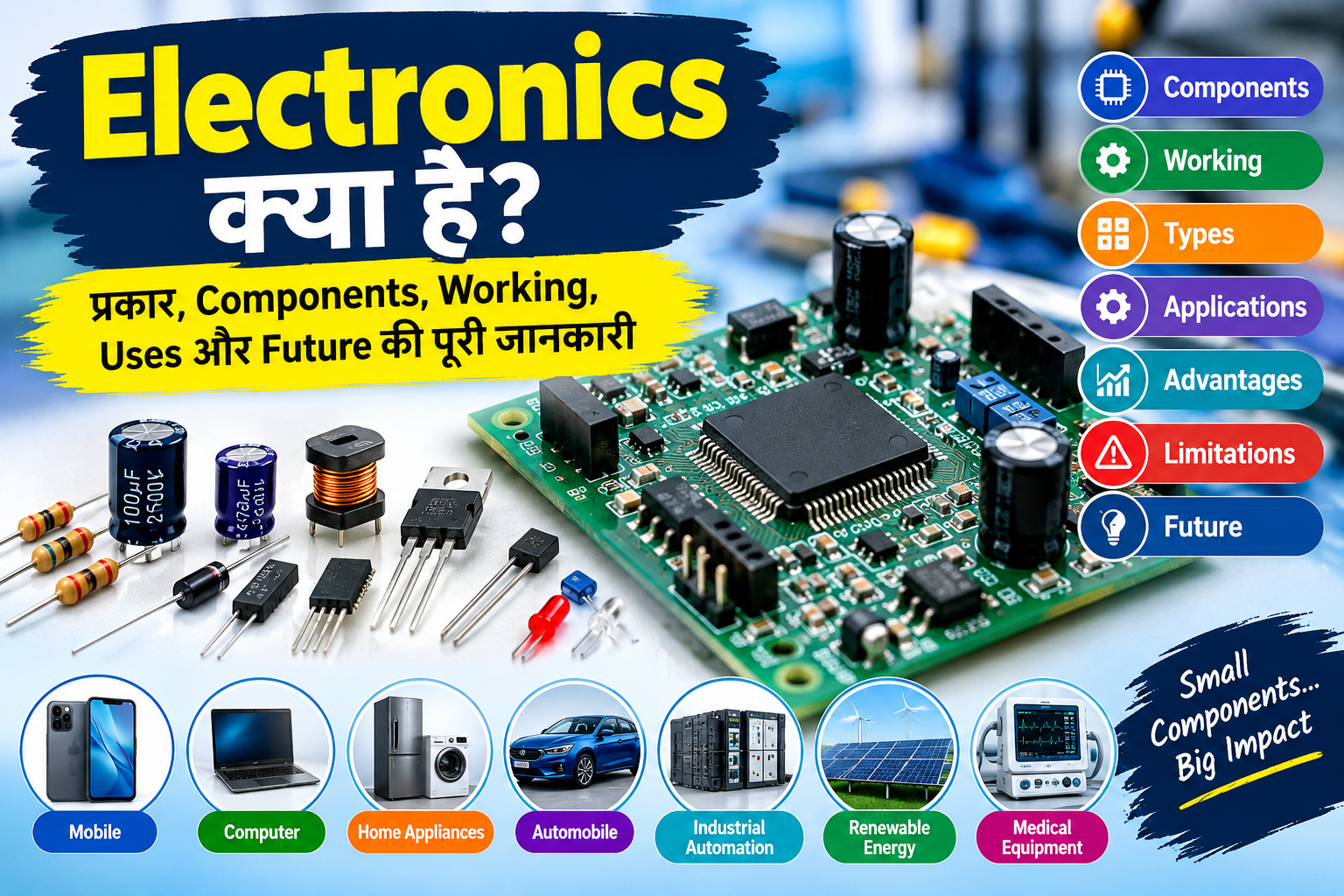
Electronics आज के समय में हमारी रोजमर्रा की जिंदगी का एक महत्वपूर्ण हिस्सा बन चुका है। सुबह उठने से लेकर रात को सोने तक हम किसी न किसी इलेक्ट्रॉनिक device का उपयोग करते हैं। मोबाइल फोन, टीवी, कंप्यूटर, स्मार्टवॉच, Wi-Fi Router, LED Light, Washing Machine, Refrigerator, Inverter और यहां तक कि आधुनिक वाहनों में भी Electronics का बड़े स्तर पर इस्तेमाल होता है।
लेकिन क्या आपने कभी सोचा है कि ये इलेक्ट्रॉनिक devices आखिर काम कैसे करते हैं? इनके अंदर कौन-कौन से components लगे होते हैं और ये components मिलकर किसी device को कैसे operate करते हैं? “अगर आप रेफ्रिजरेशन के बारे में जानना चाहते हो तो यहाँ क्लिक करो” https://mentorversehub.com/refrigeration-cycle/
इस लेख में हम इलेक्ट्रॉनिक को बहुत ही आसान भाषा में समझेंगे। साथ ही इलेक्ट्रॉनिक के प्रकार, प्रमुख electronic components, working principle, applications, फायदे, सीमाएं और भविष्य के बारे में भी विस्तार से जानेंगे। “यदि आप Electronics को वीडियो के माध्यम से जानना चाहते हैं, तो यहाँ क्लिक करें” https://www.youtube.com/watch?v=HkgI5mouVPM
Electronics क्या है?:
इलेक्ट्रॉनिक विज्ञान और तकनीक की वह शाखा है जिसमें electrons के flow को नियंत्रित करके information को process, control, transmit और receive किया जाता है। सरल भाषा में समझें तो Electronics में electrical signals को control करके अलग-अलग काम करवाए जाते हैं।
उदाहरण के लिए:
- Mobile में signal processing
- TV में audio और video processing
- Computer में data processing
- Sensor में physical quantity को electrical signal में बदलना
- Amplifier में कमजोर signal को मजबूत करना
- Control system में किसी machine को automatic तरीके से operate करना
इन सभी कार्यों में इलेक्ट्रॉनिक की महत्वपूर्ण भूमिका होती है।
Electronics और Electrical में क्या अंतर है?:
इलेक्ट्रॉनिक और Electrical दोनों एक-दूसरे से जुड़े हुए हैं, लेकिन दोनों का उपयोग अलग-अलग उद्देश्यों के लिए किया जाता है। Electrical Engineering में मुख्य रूप से electrical power का generation, transmission, distribution और utilization शामिल होता है। वहीं इलेक्ट्रॉनिक में electrical signals को process और control करने पर अधिक ध्यान दिया जाता है।
उदाहरण के लिए:
एक electric motor को चलाने के लिए electrical system महत्वपूर्ण है, जबकि motor की speed को automatically control करने के लिए इलेक्ट्रॉनिक controller का इस्तेमाल किया जा सकता है। इसलिए आधुनिक machines में Electrical और इलेक्ट्रॉनिक दोनों technologies साथ काम करती हैं।
Electronics के प्रमुख प्रकार:
Electronics को उसके application और working के आधार पर कई भागों में समझा जा सकता है।
1. Analog Electronics
Analog इलेक्ट्रॉनिक में signals continuous form में होते हैं।
उदाहरण:
- Temperature signal
- Microphone signal
- Audio signal
- Pressure signal
- Light intensity
यदि किसी sensor से temperature बदलने के साथ voltage लगातार बदलता है, तो वह analog signal हो सकता है। Analog circuits में amplifier, filter, oscillator और operational amplifier जैसे components का उपयोग किया जाता है।
2. Digital Electronics
Digital इलेक्ट्रॉनिक में information को सामान्यतः discrete values के रूप में process किया जाता है। Digital systems में Binary Number System का बहुत अधिक उपयोग होता है, जिसमें मुख्य रूप से: 0 और 1 का प्रयोग किया जाता है। Computer, mobile phone, digital clock, calculator और microcontroller आधारित systems digital electronics के उदाहरण हैं।
3. Power Electronics
Power इलेक्ट्रॉनिक में electrical power को control और convert करने के लिए semiconductor devices का इस्तेमाल किया जाता है।
इसके applications हैं:
- Inverter
- UPS
- Solar inverter
- Motor drive
- Battery charger
- Electric vehicle
- Industrial power supply
Power Electronics आज renewable energy और electric vehicles के कारण तेजी से महत्वपूर्ण हो रही है।
4. Industrial Electronics
Industrial इलेक्ट्रॉनिक का उपयोग factories और industrial plants में machines और processes को control करने के लिए किया जाता है।
इसके अंतर्गत:
- PLC
- DCS
- Sensors
- Controllers
- VFD
- Industrial communication
- Automation systems
जैसी technologies आती हैं। Power Plant, Cement Plant, Steel Plant और Manufacturing industries में Industrial Electronics का बहुत बड़ा योगदान है।
Electronic Components क्या होते हैं?:
किसी भी इलेक्ट्रॉनिक circuit को बनाने के लिए अलग-अलग components की आवश्यकता होती है। प्रत्येक component का अपना विशेष कार्य होता है।
आइए प्रमुख components को समझते हैं।
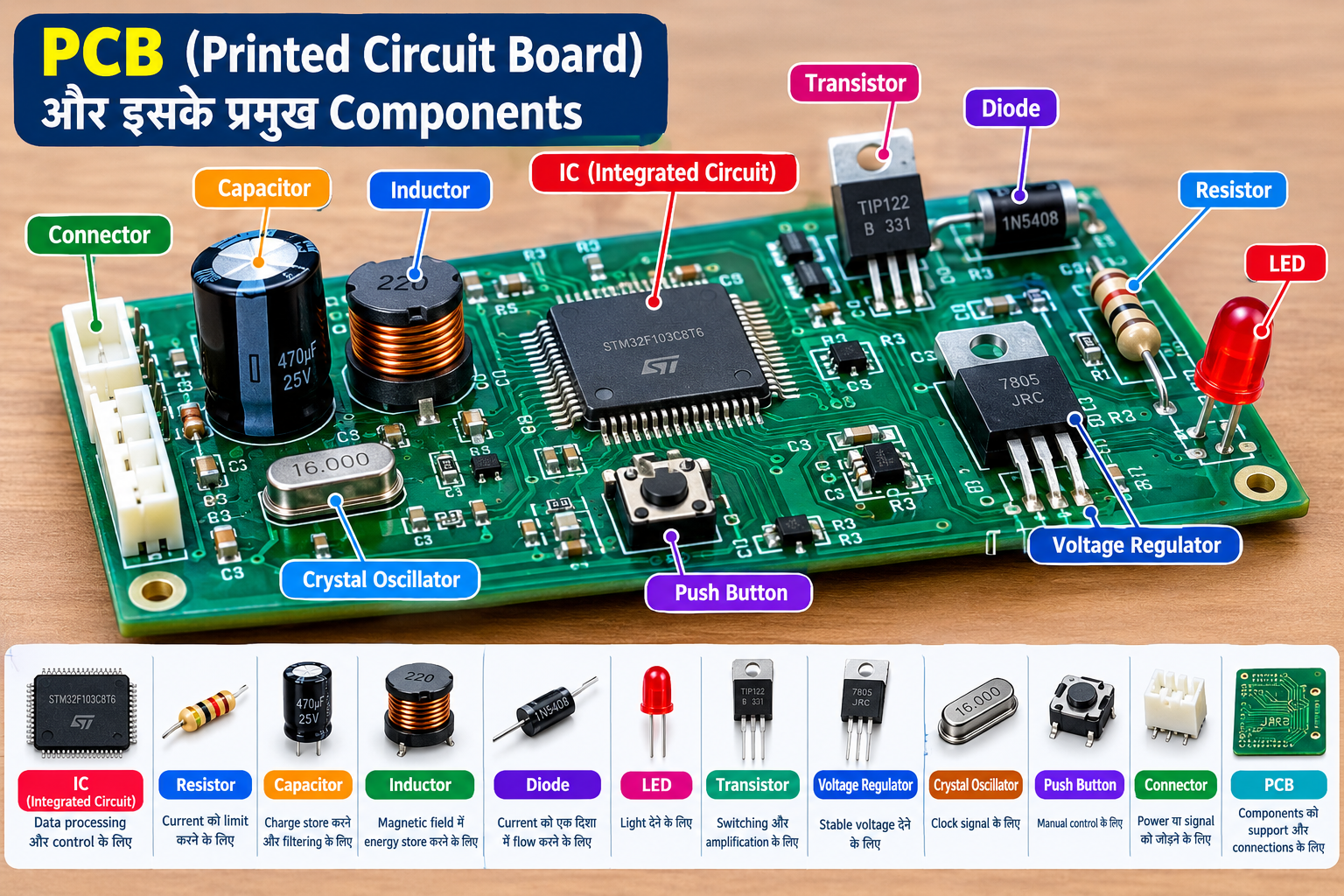
1. Resistor
Resistor एक passive electronic component है जिसका उपयोग electrical current को limit या control करने के लिए किया जाता है। इसकी resistance को Ohm में मापा जाता है। Resistance की Unit: Ohm (Ω)
Resistor का उपयोग:
- Current limiting
- Voltage division
- Biasing
- Signal control
आदि में किया जाता है।
2. Capacitor
Capacitor electrical charge को store करने वाला component है। यह दो conductive plates और उनके बीच insulating material से बना होता है।
Capacitor की मुख्य Unit: Farad (F)
इसके applications हैं:
- Filtering
- Energy storage
- Noise reduction
- Timing circuits
- Power supply circuits
- Motor circuits
3. Inductor
Inductor magnetic field के रूप में energy store करता है। इसकी Unit: Henry (H) Inductor का उपयोग filtering, power supply, transformers और कई प्रकार के electronic circuits में किया जाता है।
4. Diode
Diode एक semiconductor component है जो सामान्यतः current को एक दिशा में flow करने देता है। इसका सबसे सामान्य उपयोग rectification में होता है।
Diode के applications:
- AC को DC में बदलना
- Reverse polarity protection
- Signal processing
- Voltage regulation
- Switching
LED भी diode का एक विशेष प्रकार है।
5. LED
LED का पूरा नाम Light Emitting Diode है। जब LED में उचित direction में current flow होता है, तो यह प्रकाश उत्पन्न करती है।
आज LED का उपयोग:
- Lighting
- Indicators
- Displays
- Decorative lighting
- Automotive lighting
में किया जाता है। LED conventional bulbs की तुलना में कम power consumption के कारण बहुत लोकप्रिय हो चुकी है।
6. Transistor
Transistor Electronics के सबसे महत्वपूर्ण semiconductor components में से एक है।
इसका उपयोग मुख्य रूप से:
- Switching
- Amplification
- Signal processing
में किया जाता है। Transistor ने modern Electronics और computing technology के विकास में महत्वपूर्ण भूमिका निभाई है।
7. IC यानी Integrated Circuit
Integrated Circuit को सामान्य भाषा में IC कहा जाता है। एक IC के अंदर बहुत सारे इलेक्ट्रॉनिक components एक छोटे semiconductor chip पर मौजूद हो सकते हैं। IC के अंदर transistor, resistor और अन्य circuit elements integrated हो सकते हैं।
IC के उपयोग:
- Mobile
- Computer
- TV
- Industrial controller
- Communication equipment
- Medical equipment
आदि में होते हैं।
Microcontroller क्या है?:
Microcontroller एक छोटा programmable इलेक्ट्रॉनिक device है जिसमें processing और control के लिए आवश्यक कई functions एक chip में integrated होते हैं।
एक सामान्य microcontroller में हो सकते हैं:
- CPU
- Memory
- Input/Output pins
- Timers
- Communication interfaces
- Analog-to-digital converter
Microcontroller का उपयोग automatic systems में बहुत अधिक होता है।
उदाहरण: Automatic water level controller, temperature controller, smart home system और robotics।
Sensor क्या होता है?:
Sensor ऐसा device है जो किसी physical quantity को detect या measure करके उसे usable signal में बदलता है।
कुछ सामान्य sensors हैं:
- Temperature Sensor
- Pressure Sensor
- Level Sensor
- Proximity Sensor
- Ultrasonic Sensor
- Vibration Sensor
- Light Sensor
- Motion Sensor
उदाहरण के लिए temperature sensor temperature में बदलाव को electrical signal में बदल सकता है। Industrial automation में sensors बहुत महत्वपूर्ण भूमिका निभाते हैं।
Electronics कैसे काम करता है?:
इलेक्ट्रॉनिक की working को एक simple example से समझते हैं। मान लीजिए हमारे पास एक automatic water tank controller है।
इस system में: Sensor → Controller → Output Device का sequence हो सकता है। सबसे पहले sensor tank में पानी का level detect करता है। Sensor से प्राप्त signal controller तक जाता है। Controller उस signal को process करता है और निर्धारित logic के अनुसार निर्णय लेता है। यदि पानी का level कम है तो controller pump को ON कर सकता है। जब पानी निर्धारित level तक पहुंच जाता है, controller pump को OFF कर सकता है। इस तरह Electronics की मदद से एक manual process automatic बन जाता है।
PCB क्या है?:
PCB का पूरा नाम Printed Circuit Board है। यह इलेक्ट्रॉनिक components को mechanically support करने और electrical connections प्रदान करने के लिए उपयोग किया जाता है। PCB पर copper tracks बने होते हैं। ये tracks अलग-अलग components को electrical connection देते हैं।
एक PCB में हो सकते हैं:
- Resistors
- Capacitors
- Diodes
- ICs
- Connectors
- Transistors
- Sensors
आज लगभग हर electronic device में PCB का किसी न किसी रूप में उपयोग होता है।
Power Supply का Electronics में महत्व:
किसी इलेक्ट्रॉनिक circuit को operate करने के लिए उचित voltage और current की आवश्यकता होती है। Power supply का काम input electrical power को circuit के लिए आवश्यक form में उपलब्ध कराना होता है। उदाहरण के लिए किसी electronic circuit को 5V DC चाहिए तो power supply 230V AC को suitable low-voltage DC में convert कर सकती है।
Power supply के प्रमुख parts में शामिल हो सकते हैं:
- Transformer
- Rectifier
- Filter
- Voltage regulator
आधुनिक devices में SMPS technology का भी व्यापक उपयोग होता है।
Electronics के Applications:
आज इलेक्ट्रॉनिक लगभग हर क्षेत्र में दिखाई देती है।
- 1. Communication Mobile phone, satellite communication, radio, television और internet communication systems Electronics पर आधारित हैं।
- 2. Medical Field Medical equipment जैसे ECG machine, patient monitor, ultrasound equipment और कई diagnostic systems में Electronics का उपयोग होता है।
- 3. Automobile आधुनिक vehicles में electronic control units, sensors, cameras, infotainment systems और safety systems का उपयोग किया जाता है।
- 4. Industrial Automation Factories में automatic control और monitoring के लिए PLC, sensors, drives और communication systems उपयोग किए जाते हैं।
- 5. Home Appliances Washing machine, refrigerator, microwave oven, air conditioner और smart TV जैसे devices Electronics के बिना आधुनिक रूप में संभव नहीं होते।
- 6. Renewable Energy Solar inverter, battery management system और energy monitoring systems में Electronics की महत्वपूर्ण भूमिका है।
- 7. Robotics Robots में sensors, controllers, motors और communication modules को control करने के लिए electronic circuits आवश्यक होते हैं।
Electronics के फायदे:
इलेक्ट्रॉनिक ने मानव जीवन को काफी आसान बनाया है।
इसके प्रमुख फायदे हैं:
- Automation को संभव बनाता है।
- छोटे आकार में अधिक functionality प्रदान करता है।
- Fast signal processing करता है।
- Accurate measurement में सहायता करता है।
- Communication को आसान बनाता है।
- Energy management में सहायता करता है।
- Machines को intelligent बनाने में मदद करता है।
- Industrial productivity बढ़ाने में योगदान देता है।
Electronics की कुछ सीमाएं:
इलेक्ट्रॉनिक के कई फायदे हैं, लेकिन इसकी कुछ limitations भी हैं।
- Heat: Electronic components में heat generation हो सकती है। अधिक temperature component की reliability को प्रभावित कर सकता है।
- Voltage Sensitivity: कुछ electronic components voltage fluctuation के प्रति sensitive होते हैं।
- Moisture और Dust: Industrial environment में moisture, dust और contamination electronic equipment को नुकसान पहुंचा सकते हैं।
- Component Failure: किसी एक महत्वपूर्ण component के खराब होने से पूरा circuit काम करना बंद कर सकता है।
इसलिए proper maintenance और protection जरूरी है।
Electronics में Troubleshooting क्यों जरूरी है?:
Industrial और commercial systems में इलेक्ट्रॉनिक faults के कारण machine shutdown हो सकती है। Troubleshooting में technician को systematic तरीके से fault का कारण पता करना होता है। एक सामान्य troubleshooting approach हो सकती है:
Power Supply Check → Wiring Check → Input Signal Check → Component Check → Output Check
उदाहरण के लिए यदि कोई sensor signal नहीं दे रहा है तो सबसे पहले supply voltage, wiring, connector और sensor output को check किया जा सकता है। Multimeter, oscilloscope और अन्य testing instruments troubleshooting में उपयोगी होते हैं।
Electronics का भविष्य:
इलेक्ट्रॉनिक का भविष्य तेजी से बदल रहा है। Artificial Intelligence, Internet of Things, Electric Vehicles, Robotics और Renewable Energy जैसी technologies Electronics को नए स्तर पर ले जा रही हैं। भविष्य में smart devices अधिक intelligent और interconnected हो सकते हैं। घर के appliances से लेकर industrial machines तक devices एक-दूसरे के साथ data exchange कर सकेंगे। Electric vehicles में battery management और power electronics की भूमिका और महत्वपूर्ण हो रही है। इसी तरह industrial automation में sensors, controllers और communication technologies का उपयोग लगातार बढ़ रहा है।
Electronics सीखने के लिए क्या पढ़ें?:
यदि कोई व्यक्ति इलेक्ट्रॉनिक सीखना चाहता है तो शुरुआत basic concepts से करनी चाहिए। सबसे पहले इन topics को समझना उपयोगी रहेगा:
- Voltage
- Current
- Resistance
- Ohm’s Law
- AC और DC
- Resistor
- Capacitor
- Inductor
- Diode
- Transistor
- IC
- Digital इलेक्ट्रॉनिक
- Sensors
- Microcontroller
- PCB
- Power इलेक्ट्रॉनिक
इसके बाद practical circuits और troubleshooting सीखना चाहिए। Theory के साथ practical knowledge Electronics को समझने का सबसे अच्छा तरीका है।
Conclusion:
इलेक्ट्रॉनिक आज की modern technology की backbone का एक महत्वपूर्ण हिस्सा है। Mobile phone से लेकर Power Plant automation और electric vehicle से लेकर medical equipment तक, Electronics का उपयोग लगातार बढ़ रहा है। इलेक्ट्रॉनिक को समझने के लिए केवल components के नाम याद करना पर्याप्त नहीं है। यह समझना भी जरूरी है कि Voltage, Current और Signals किस प्रकार circuit में काम करते हैं और अलग-अलग components मिलकर किस तरह एक complete system बनाते हैं। Electronics केवल एक subject नहीं है, बल्कि आधुनिक दुनिया में इस्तेमाल होने वाली लगभग हर smart technology के पीछे काम करने वाली एक महत्वपूर्ण तकनीक है।
यदि आप इलेक्ट्रॉनिक की शुरुआत कर रहे हैं तो पहले basic electrical concepts और छोटे circuits को समझें। इसके बाद semiconductor devices, digital इलेक्ट्रॉनिक, sensors, microcontrollers और automation की तरफ बढ़ सकते हैं। आज के technology-driven समय में इलेक्ट्रॉनिक की knowledge students, technicians, engineers और automation professionals सभी के लिए उपयोगी हो सकती है।