
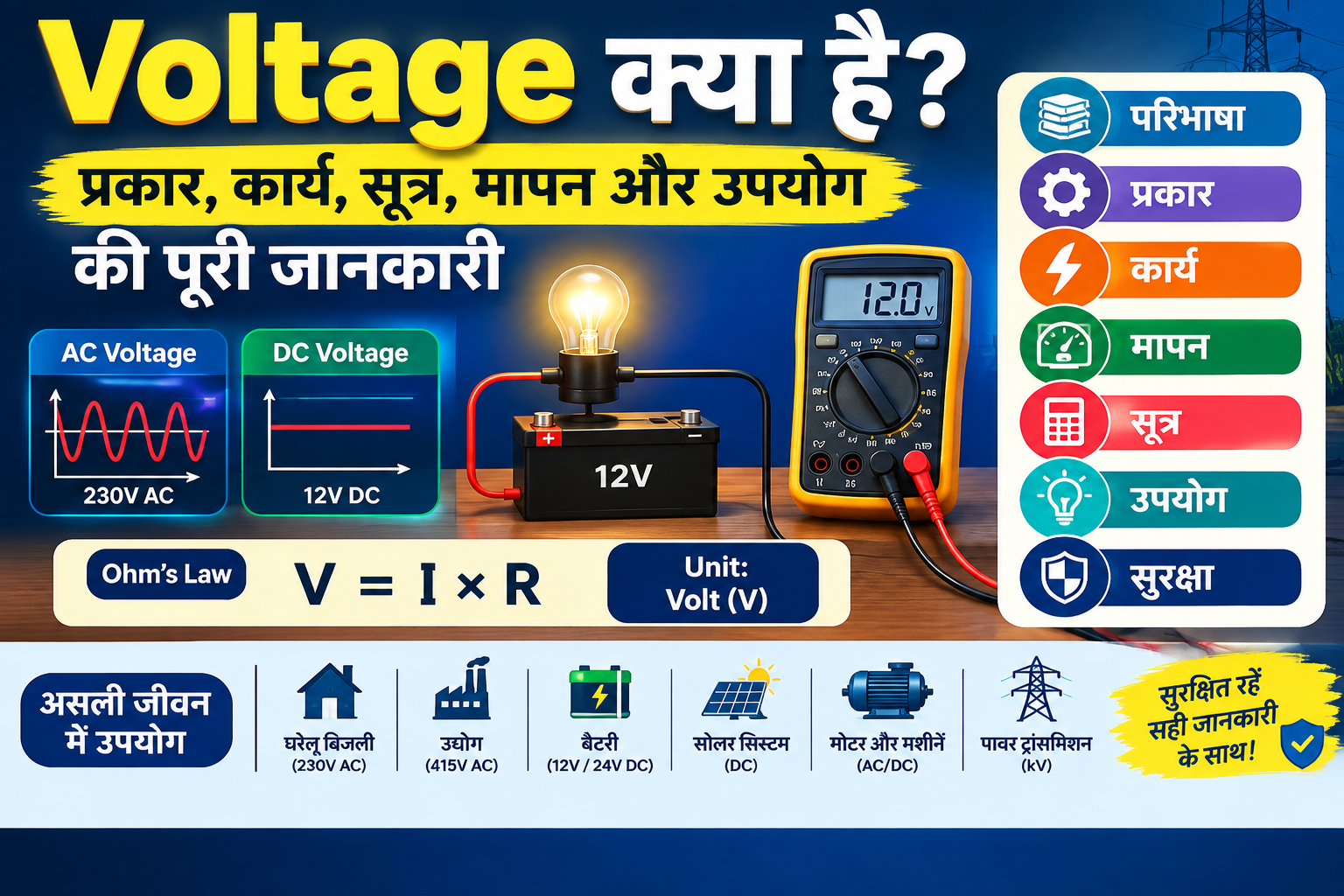
Voltage (वोल्टेज) इलेक्ट्रिकल और इलेक्ट्रॉनिक्स सिस्टम का एक बहुत ही महत्वपूर्ण विषय है। किसी भी विद्युत परिपथ (Electrical Circuit) में करंट के प्रवाह को समझने के लिए वोल्टेज की जानकारी होना जरूरी है। घरों में मिलने वाली बिजली से लेकर Power Plant, Transformer, Motor, Generator, Battery, PLC, Control System और Electronic Circuits तक लगभग हर जगह Voltage का उपयोग होता है।
वोल्टेज वह विद्युत दबाव है जो किसी Circuit में Electric Current को प्रवाहित करने की क्षमता पैदा करता है। जिस प्रकार पानी को पाइप में बहाने के लिए Pressure की आवश्यकता होती है, उसी प्रकार Electrical Circuit में Electrons के प्रवाह के लिए Voltage की आवश्यकता होती है।
इस लेख में हम वोल्टेज क्या है, इसका Unit क्या है, वोल्टेज कैसे काम करता है, इसके प्रकार, Formula, Measurement, AC और DC Voltage में अंतर, High और Low वोल्टेज, वोल्टेज Drop, Power से संबंध, Applications और Electrical Safety के बारे में विस्तार से समझेंगे।
वोल्टेज क्या है?:
वोल्टेज को हिंदी में सामान्यतः वोल्टता या विद्युत विभवांतर कहा जाता है। यह दो बिंदुओं के बीच Electric Potential का अंतर होता है। जब किसी Circuit के दो Points के बीच Potential Difference मौजूद होता है, तो उचित Electrical Path मिलने पर Current Flow हो सकता है। उदाहरण के लिए, यदि किसी Battery के दोनों Terminals के बीच 12V Voltage है और उससे कोई suitable load जोड़ा जाता है, तो Circuit में Current Flow होने लगता है। वोल्टेज को सामान्यतः V अक्षर से दर्शाया जाता है।
वोल्टेज का SI Unit वोल्टेज का SI Unit Volt (वोल्ट) है। इसे V से लिखा जाता है।
उदाहरण:
- 1 Volt = 1 V
- 5 Volt = 5 V
- 12 Volt = 12 V
- 24 Volt = 24 V
- 230 Volt = 230 V
- 415 Volt = 415 V
वोल्टेज कैसे काम करता है?:
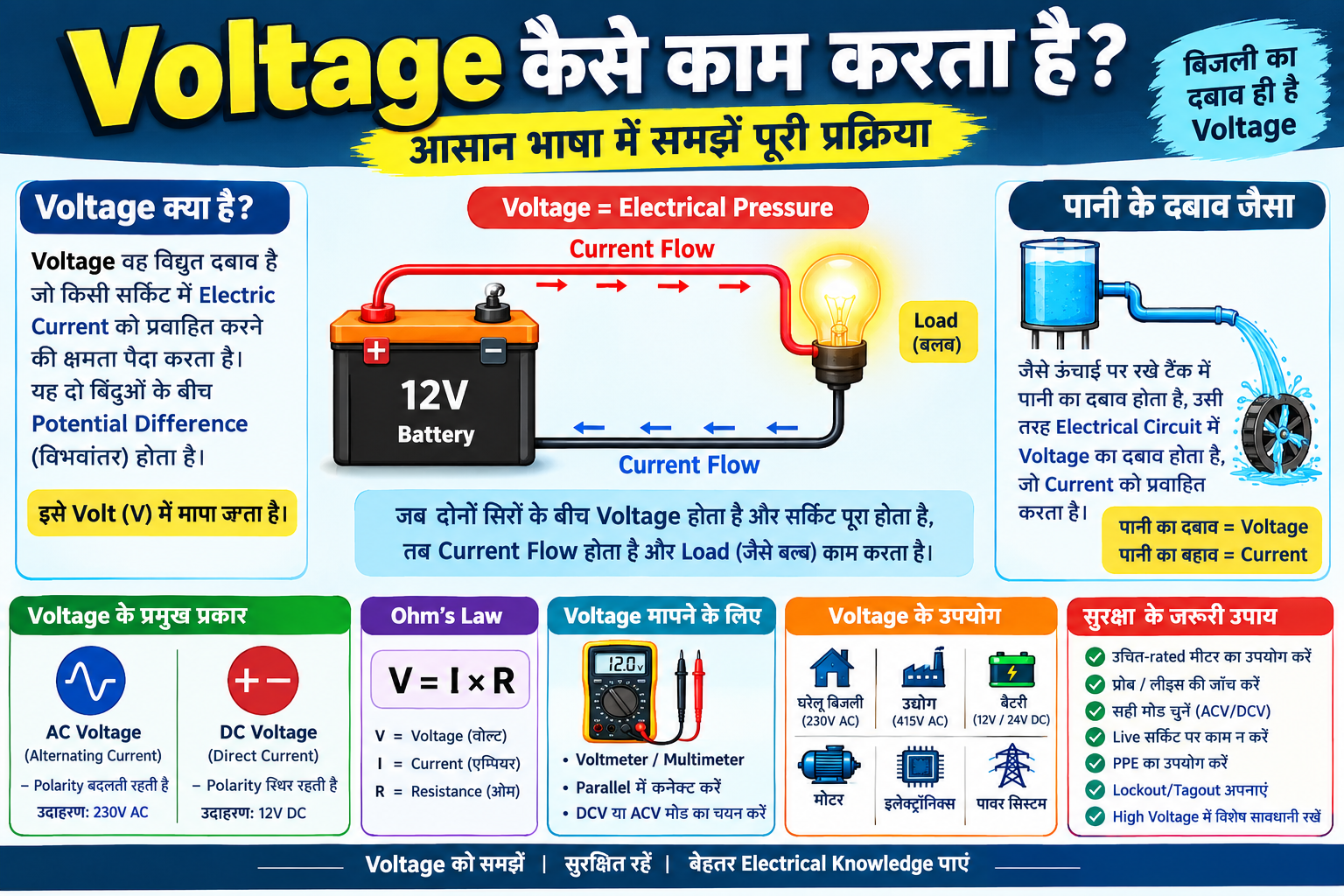
वोल्टेज को समझने के लिए पानी के Pressure का उदाहरण काफी उपयोगी है। मान लीजिए एक पानी की Tank ऊंचाई पर रखी हुई है। Tank में पानी मौजूद है और नीचे एक पाइप लगा हुआ है। Tank में पानी का Pressure जितना अधिक होगा, उचित रास्ता मिलने पर पानी उतनी अधिक force के साथ बह सकता है। Electrical Circuit में वोल्टेज कुछ इसी तरह काम करता है। यहाँ:
- Voltage = Electrical Pressure
- Current = Electric Charge का Flow
- Resistance = Current के Flow का विरोध
इसलिए जब Circuit में वोल्टेज Source उपलब्ध होता है और Circuit पूरा होता है, तो Current Flow कर सकता है। ध्यान रखना चाहिए कि Voltage अपने आप में Current नहीं है। वोल्टेज और Current दो अलग-अलग electrical quantities हैं। अगर आप Semiconductor के बारे में जानना चाहते हो तो यहाँ क्लिक करो- https://mentorversehub.com/semiconductor/
Voltage का Formula:
वोल्टेज, Current और Resistance के बीच संबंध को Ohm’s Law से समझा जा सकता है। Formula:- V = I × R, जहाँ:
- V = Voltage
- I = Current
- R = Resistance
उदाहरण के लिए यदि किसी Circuit में Current 2 Ampere है और Resistance 10 Ohm है:
- V = 2 × 10
- V = 20 Volt
अर्थात Circuit में आवश्यक वोल्टेज 20V होगा। Ohm’s Law Electrical troubleshooting और basic circuit calculations में बहुत उपयोगी है।
Voltage के प्रमुख प्रकार:
वोल्टेज को कई आधारों पर अलग-अलग प्रकारों में समझा जा सकता है। सबसे सामान्य रूप से इसे AC Voltage और DC Voltage में बाँटा जाता है।
1. AC Voltage:
AC का पूरा नाम Alternating Current है। AC वोल्टेज में वोल्टेज की polarity और magnitude समय के साथ बदलती रहती है। घरेलू बिजली supply इसका सामान्य उदाहरण है। भारत में सामान्य घरेलू single-phase supply लगभग 230V AC nominal होती है। AC Voltage का उपयोग मुख्य रूप से:
- घरों की Electrical Supply
- Industrial Machines
- Motors
- Transformers
- Pumps
- Fans
- Heating Equipment
- Power Distribution Systems में किया जाता है।
2. DC Voltage:
DC का पूरा नाम Direct Current है। DC वोल्टेज में सामान्यतः polarity निश्चित रहती है। इसके दो प्रमुख terminals होते हैं:
- Positive (+)
- Negative (-) Battery इसका सबसे सामान्य उदाहरण है।
उदाहरण:
- 1.5V Cell
- 3.7V Lithium-ion Battery
- 5V DC
- 12V DC
- 24V DC
- 48V DC
Industrial Control Systems में 24V DC supply बहुत सामान्य रूप से देखने को मिलती है। PLC, Sensors, Relays और Control Devices में भी DC वोल्टेज का उपयोग किया जाता है।
AC Voltage और DC वोल्टेज में अंतर:
| आधार | AC Voltage | DC Voltage |
|---|---|---|
| Full Form | Alternating Current | Direct Current |
| Polarity | बदलती रहती है | सामान्यतः स्थिर |
| Source | Grid, Alternator | Battery, DC Supply |
| उपयोग | घर और Industry | Electronics और Control |
| Transformer | आसानी से उपयोग किया जा सकता है | Directly सामान्य transformer में नहीं |
| उदाहरण | 230V AC | 24V DC |
वोल्टेज का Unit और इसके Multiples:
वोल्टेज का मुख्य Unit Volt है, लेकिन बड़ी और छोटी values को दर्शाने के लिए अलग-अलग prefixes का उपयोग किया जाता है।
Millivolt: 1 mV = 0.001 V इसका उपयोग बहुत छोटे वोल्टेज को मापने में किया जाता है।
Kilovolt: 1 kV = 1000 V Power Transmission और High वोल्टेज Systems में kV का उपयोग किया जाता है।
उदाहरण:
- 6.6 kV
- 11 kV
- 33 kV
- 132 kV
- 220 kV
- 400 kV
Megavolt: 1 MV = 1,000,000 V बहुत High वोल्टेज Systems को दर्शाने में इसका उपयोग किया जा सकता है।
वोल्टेज को कैसे Measure करें?:
वोल्टेज को मापने के लिए Voltmeter या Digital Multimeter (DMM) का उपयोग किया जाता है। Digital Multimeter में Voltage मापने के लिए सामान्यतः:
- Black Probe → COM
- Red Probe → V/Ω Terminal का उपयोग किया जाता है। इसके बाद Meter को उचित Voltage Mode पर Select किया जाता है।
उदाहरण के लिए:
- DC Voltage → DCV
- AC Voltage → ACV
महत्वपूर्ण बात: वोल्टेज को सामान्यतः Parallel में measure किया जाता है। इसका मतलब है कि Meter की दोनों probes को उन दो points के बीच लगाया जाता है जिनके बीच Potential Difference जानना है।
वोल्टेज और Current में अंतर:
बहुत से beginners वोल्टेज और Current को एक ही समझ लेते हैं, जबकि दोनों अलग-अलग quantities हैं। Voltage Voltage Electrical Pressure या Potential Difference को दर्शाता है।
Unit: Volt (V)
Current: Current Electric Charge के Flow की मात्रा को दर्शाता है।
Unit: Ampere (A)
एक आसान उदाहरण: यदि किसी Circuit में Voltage source मौजूद है, लेकिन Circuit open है, तो वोल्टेज मौजूद हो सकता है लेकिन Current flow नहीं करेगा। इसलिए वोल्टेज और Current को अलग-अलग समझना जरूरी है।
Voltage और Resistance का संबंध:
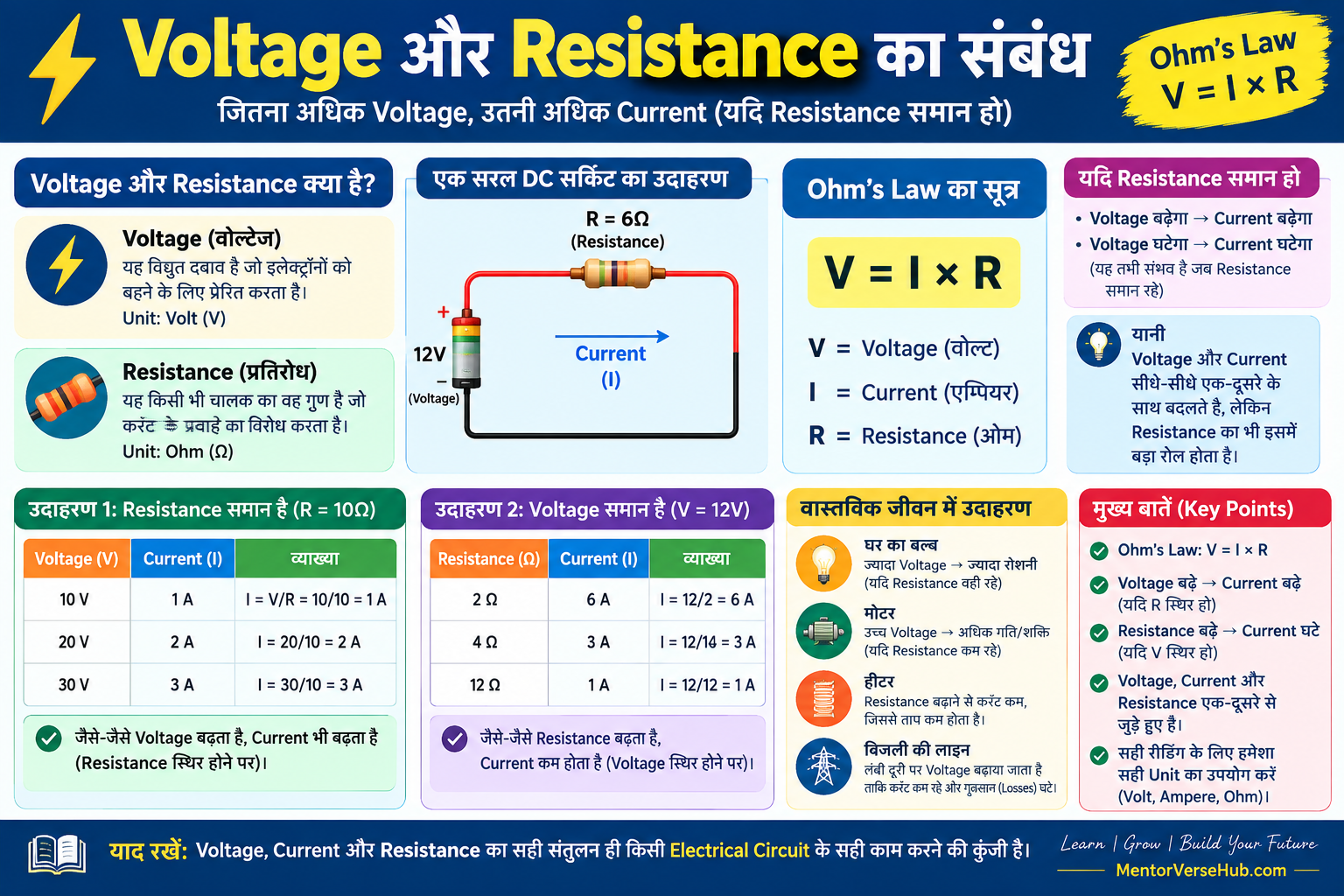
Resistance किसी Circuit में Current के Flow का विरोध करता है। Ohm’s Law: V = I × R इससे पता चलता है कि यदि Resistance constant है और वोल्टेज बढ़ाया जाता है, तो Current भी बढ़ सकता है। उदाहरण:
- V = 12V
- R = 6Ω
- I = V/R
- I = 12/6
- I = 2A इस प्रकार Circuit में Current 2 Ampere होगा।
Voltage Drop क्या होता है?:
Electrical Circuit में जब Current किसी Resistance, Cable, Connector या Load से होकर गुजरता है, तो वोल्टेज का कुछ भाग उस component के across गिर सकता है। इसे Voltage Drop कहा जाता है। उदाहरण के लिए यदि किसी Circuit के शुरुआत में 24V है और Load तक पहुँचते-पहुँचते वोल्टेज 22V रह जाता है, तो:
- Voltage Drop = 24 – 22
- Voltage Drop = 2V
बहुत अधिक वोल्टेज Drop होने पर Equipment सही तरीके से काम नहीं कर सकता। इसके कारण हो सकते हैं:
- Cable बहुत लंबी होना
- Cable का छोटा size
- Loose Connection
- Corrosion
- अधिक Load
- खराब Connector
- High Resistance
Industrial troubleshooting में वोल्टेज Drop की checking काफी उपयोगी होती है।
वोल्टेज और Power का संबंध:
Electrical Power को सामान्य DC या resistive circuit में निम्न Formula से समझा जा सकता है: P = V × I जहाँ:
- P = Power in Watt
- V = Voltage in Volt
- I = Current in Ampere
उदाहरण:
V = 24V
I = 2A
तो:
P = 24 × 2
P = 48W अर्थात Load लगभग 48 Watt Power consume कर रहा है।
Low वोल्टेज क्या है?:
Low वोल्टेज का अर्थ सामान्य रूप से ऐसे electrical system से है जिसमें वोल्टेज level relatively कम होता है। हालांकि इसकी exact regulatory definition देश और standard के अनुसार बदल सकती है। Control और electronics में 5V, 12V और 24V जैसे levels बहुत common हैं।
उदाहरण:
- Sensors
- PLC Inputs
- Relays
- Control Circuits
- Electronic Boards
- CCTV Systems
- Automation Systems
इनमें विभिन्न Low वोल्टेज supplies देखने को मिलती हैं।
High वोल्टेज क्या है?:
High वोल्टेज का उपयोग Power Generation, Transmission और Distribution Systems में किया जाता है। Power Plant से Grid तक Electrical Power भेजने के लिए वोल्टेज को Transformer की सहायता से काफी बढ़ाया जा सकता है। उदाहरण के लिए Power Transmission में:
- 132 kV
- 220 kV
- 400 kV
जैसे वोल्टेज Levels उपयोग किए जा सकते हैं। High Voltage का उद्देश्य केवल Voltage को बढ़ाना नहीं है। Power Transmission में Voltage बढ़ाने से समान Power के लिए Current कम किया जा सकता है, जिससे transmission losses को कम करने में मदद मिलती है।
Transformer और वोल्टेज:
Transformer AC वोल्टेज को एक level से दूसरे level पर बदलने के लिए उपयोग किया जाता है। Transformer के दो मुख्य प्रकार हैं:
Step-Up Transformer यह वोल्टेज को बढ़ाता है। उदाहरण: 11 kV → 132 kV
Step-Down Transformer यह वोल्टेज को कम करता है। उदाहरण: 11 kV → 415 V Power Generation और Distribution Systems में Transformers का बहुत महत्वपूर्ण स्थान है।
Power Plant में वोल्टेज का महत्व:
Power Plant में वोल्टेज की monitoring अत्यंत महत्वपूर्ण होती है। Generator Electrical Energy produce करता है और Generator Terminal वोल्टेज को विभिन्न measuring और protection systems द्वारा monitor किया जाता है। Power Plant में Voltage से संबंधित equipment में शामिल हो सकते हैं:
- Generator
- Transformer
- Busbar
- Switchgear
- Circuit Breaker
- Potential Transformer (PT/VT)
- Protection Relay
- Voltmeter
- Control Panel
- Synchronizing System
यदि वोल्टेज में abnormal condition आती है तो protection system equipment को सुरक्षित रखने के लिए action ले सकता है।
Voltage Fluctuation क्या है?:
जब Supply वोल्टेज अपने सामान्य स्तर से बार-बार ऊपर या नीचे होता है, तो इसे वोल्टेज Fluctuation कहा जा सकता है। उदाहरण के लिए किसी equipment की expected supply 230V है, लेकिन supply में लगातार noticeable variation हो रहा है। Voltage fluctuation के कारण:
- Lights flicker कर सकती हैं
- Motors का performance प्रभावित हो सकता है
- Electronic equipment malfunction कर सकता है
- Sensitive instruments में error आ सकता है
Industrial systems में Voltage quality की monitoring इसलिए महत्वपूर्ण होती है।
Overvoltage और Under voltage:
Overvoltage जब वोल्टेज निर्धारित या सामान्य operating level से अधिक हो जाता है, तो इसे Overvoltage कहा जाता है। इसके कारण equipment insulation और electronic components पर stress बढ़ सकता है।
Under वोल्टेज जब वोल्टेज आवश्यक operating level से कम हो जाता है, तो इसे Under वोल्टेज कहा जाता है। इससे motors में performance problems और control equipment में malfunction हो सकता है। किसी particular equipment के लिए acceptable voltage range हमेशा उसके manufacturer specifications के अनुसार देखनी चाहिए।
वोल्टेज से संबंधित सामान्य Electrical Instruments:
वोल्टेज को measure या monitor करने के लिए विभिन्न instruments उपयोग किए जाते हैं:
- 1. Voltmeter: वोल्टेज measurement के लिए।
- 2. Digital Multimeter: वोल्टेज, Current, Resistance और अन्य quantities की checking के लिए।
- 3. Clamp Meter: मुख्य रूप से Current measurement के लिए उपयोग होता है, लेकिन कई clamp meters में वोल्टेज measurement की सुविधा भी होती है।
- 4. Oscilloscope: वोल्टेज waveform को समय के साथ देखने के लिए उपयोग किया जाता है।
- 5. Panel Meter: Electrical panels में वोल्टेज monitoring के लिए उपयोग किया जाता है।
वोल्टेज मापते समय सुरक्षा:
वोल्टेज का Unit Volt (V) है और इसे Voltmeter या Digital Multimeter की सहायता से measure किया जाता है। वोल्टेज मुख्य रूप से AC और DC रूप में पाया जाता है। Battery, Charger, PLC, Sensor, Motor, Transformer, Generator और Power Transmission System सभी में वोल्टेज की महत्वपूर्ण भूमिका होती है। Electrical वोल्टेज को measure करते समय safety सबसे महत्वपूर्ण है। विशेष रूप से High वोल्टेज और Industrial Systems में बिना उचित training के measurement नहीं करना चाहिए। कुछ महत्वपूर्ण safety points:
- उचित-rated meter का उपयोग करें।
- Meter leads और probes की condition check करें।
- सही measurement mode select करें।
- Damaged insulation वाले probes का उपयोग न करें।
- हाथ और working area को सुरक्षित रखें।
- Live electrical equipment पर केवल authorized और trained person ही काम करे।
- PPE का उपयोग करें जहाँ आवश्यक हो।
- Electrical isolation और Lockout/Tagout procedures का पालन करें।
- Meter की category rating equipment के अनुसार उपयुक्त होनी चाहिए।
- Measurement से पहले circuit और expected वोल्टेज के बारे में जानकारी प्राप्त करें।
230V या उससे अधिक live electrical circuits भी खतरनाक हो सकते हैं। High वोल्टेज systems में विशेष electrical safety procedures आवश्यक होते हैं।
वोल्टेज के Practical Examples:
हम अपने आसपास वोल्टेज के अनेक उदाहरण देख सकते हैं।
- Mobile Charger: USB और mobile charging systems में low DC voltage का उपयोग होता है।
- Battery: Car battery सामान्यतः 12V nominal system का उदाहरण है।
- Home Supply: भारत में सामान्य घरेलू single-phase supply लगभग 230V AC nominal होती है।
- Industrial Control: PLC और कई industrial control circuits में 24V DC supply बहुत common है।
- Power Transmission: Long-distance transmission में बहुत high voltage levels का उपयोग किया जाता है।
वोल्टेज क्यों महत्वपूर्ण है?:
वोल्टेज Electrical Engineering की basic और fundamental quantities में से एक है। इसके बिना electrical circuit की working को समझना कठिन है। वोल्टेज की जानकारी इन क्षेत्रों में विशेष रूप से उपयोगी है:
- Electrical Engineering
- Electronics
- Instrumentation
- Automation
- Power Plant
- Industrial Maintenance
- PLC & DCS
- Solar Energy
- Battery Systems
- Electric Vehicles
- Home Electrical Systems
एक Instrument Technician के लिए भी वोल्टेज की अच्छी understanding जरूरी है क्योंकि sensors, transmitters, PLC, DCS और control circuits की troubleshooting में वोल्टेज measurement अक्सर पहला diagnostic step होता है। यदि आप वोल्टेज को वीडियो के माध्यम से जानना चाहते हैं, तो यहाँ क्लिक करें:- https://www.youtube.com/watch?v=KBrvnJ6uqrg
CONCLUSION:
वोल्टेज या विद्युत विभवांतर किसी Electrical System की सबसे महत्वपूर्ण quantities में से एक है। इसे सरल भाषा में Electrical Pressure की तरह समझा जा सकता है, जो suitable circuit में current flow को drive करने में मदद करता है। Ohm’s Law V = I × R Voltage, Current और Resistance के बीच संबंध समझने में मदद करता है, जबकि Power के लिए सामान्य संबंध P = V × I है।
Electrical field में काम करने वाले व्यक्ति के लिए वोल्टेज की सही understanding केवल theoretical knowledge नहीं है, बल्कि troubleshooting, maintenance, measurement और safety के लिए भी आवश्यक है। खासकर Industrial और Power Plant systems में सही Voltage monitoring equipment की reliable और safe operation में महत्वपूर्ण भूमिका निभाती है।
इसलिए यदि आप Electrical, Electronics, Instrumentation या Industrial Automation सीख रहे हैं, तो वोल्टेज को अच्छी तरह समझना आपके आगे के topics जैसे Current, Resistance, Power, Transformer, Motor, Generator, AC/DC और Electrical Protection को समझने का मजबूत आधार तैयार करेगा।