
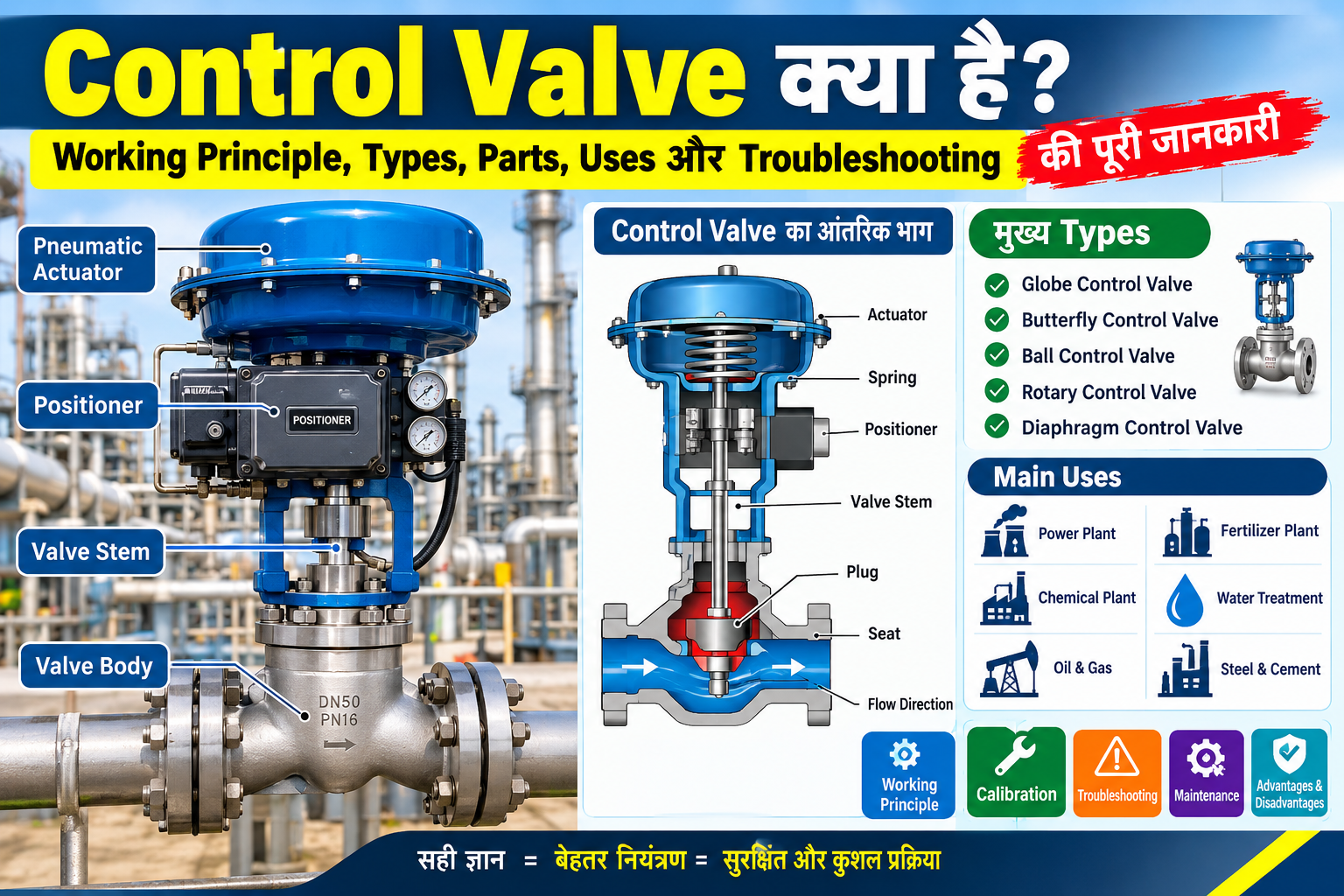
Control Valve किसी भी process plant की instrumentation और automation system का एक महत्वपूर्ण हिस्सा है। Power Plant, Chemical Plant, Oil & Gas, Fertilizer Plant, Cement Plant, Steel Plant और अन्य industrial processes में fluid के flow, pressure, temperature और level को नियंत्रित करने के लिए Control Valve का उपयोग किया जाता है।
इस लेख में हम Control Valve का working principle, construction, parts, types, actuator, positioner, applications, advantages, disadvantages और common troubleshooting आसान हिंदी में समझेंगे। अगर आप सीमेंस पोजिशनर के बारे में जानना चाहते हैं तो इस लिंक पर क्लिक करें। https://mentorversehub.com/siemens-positioner-in-hindi/
सरल शब्दों में कहा जाए तो Control Valve एक ऐसी automatic valve है जो process में जाने वाले fluid की मात्रा को आवश्यकता के अनुसार कम या ज्यादा करती है। इसे सामान्यतः PLC या DCS जैसे control system से मिलने वाले signal के आधार पर operate किया जाता है।
उदाहरण के लिए यदि किसी process में temperature बढ़ जाता है, तो DCS Control Valve को signal भेज सकता है। Valve अपनी opening को adjust करके cooling water या steam के flow को बदलता है और process temperature को निर्धारित value के आसपास बनाए रखने में मदद करता है।
Control Valve क्या है?:
कंट्रोल वाल्व एक final control element है। इसका मुख्य काम process fluid के flow को नियंत्रित करना होता है। जब किसी process parameter जैसे:
- Flow
- Pressure
- Temperature
- Level
में बदलाव आता है, तो transmitter उस parameter को measure करता है। इसके बाद controller actual value की तुलना set point से करता है और कंट्रोल वाल्व को आवश्यक output signal देता है। Control Valve इस signal के अनुसार अपनी opening बदलता है।
आसान उदाहरण:
मान लीजिए किसी tank में पानी का level 70% रखना है। यदि level 80% हो जाता है, तो कंट्रोल वाल्व valve की opening कम कर सकता है। इससे tank में आने वाले पानी का flow कम होगा और level वापस निर्धारित range में आने लगेगा। इस प्रकार कंट्रोल वाल्व process को automatically control करने में सहायता करता है।
Control Valve का Working Principle:
कंट्रोल वाल्व का basic working principle काफी सरल है। Process से मिलने वाला parameter transmitter द्वारा measure किया जाता है। Transmitter इस measurement को electrical या digital signal के रूप में कंट्रोल वाल्व तक भेजता है।
इसके बाद PLC/DCS controller:
Set Point → Process Value → Controller → Output Signal → Positioner → Actuator → Valve Stem → Valve Opening
के आधार पर Control Valve को operate करता है।
उदाहरण: Flow Control मान लीजिए किसी pipeline में required flow 100 m³/hr है। यदि actual flow केवल 80 m³/hr है, तो controller valve को ज्यादा open करने का command दे सकता है।
Valve opening बढ़ने पर:
Flow ↑ → Process Value ↑
और जब flow set point के करीब पहुंच जाता है, तो controller valve की position को स्थिर कर देता है। इसी प्रकार अगर flow बहुत ज्यादा हो जाए, तो valve को close direction में move किया जा सकता है।
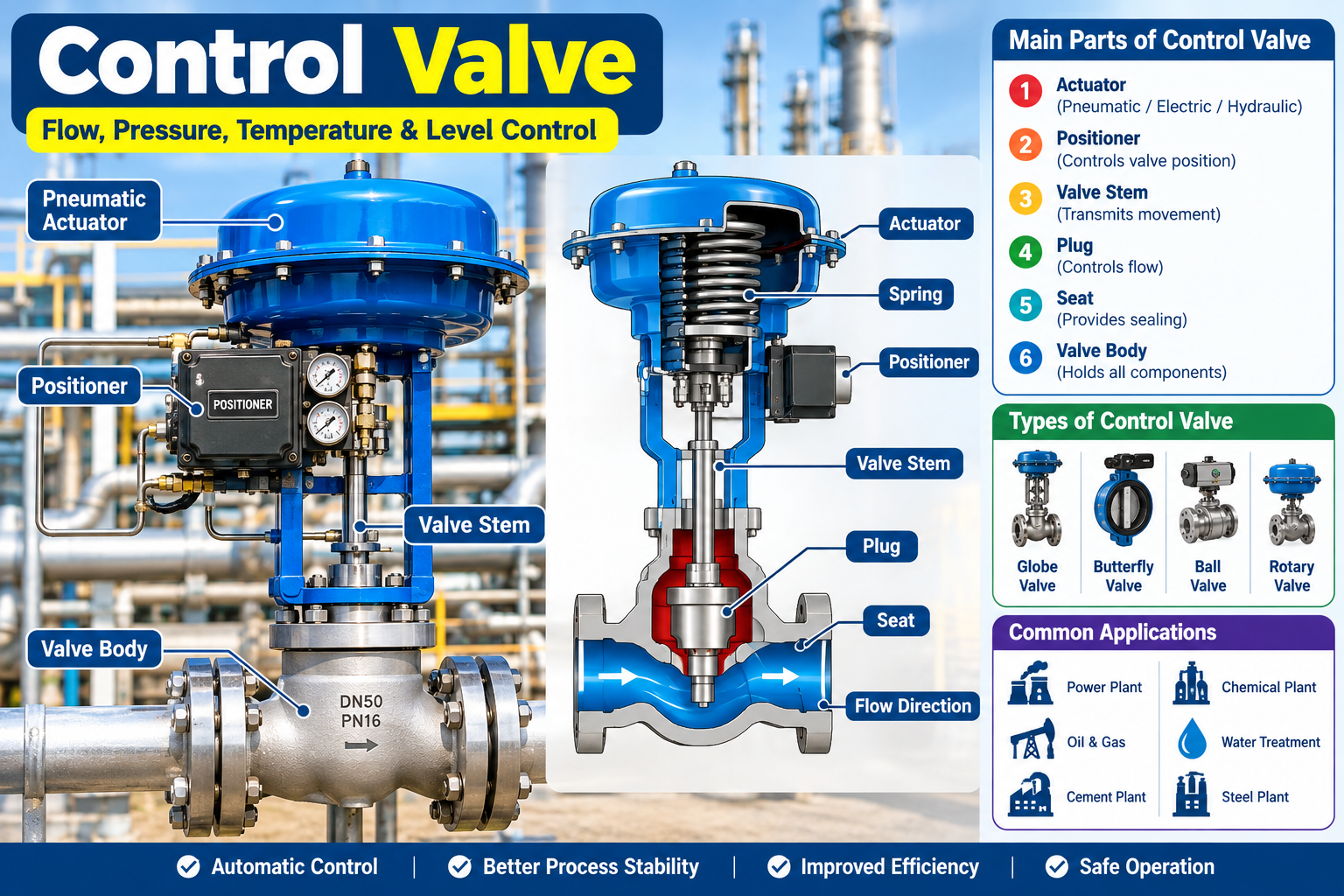
Control Valve के मुख्य Parts:
एक कंट्रोल वाल्व कई mechanical और instrumentation components से मिलकर बना होता है।
1. Valve Body:
Valve body कंट्रोल वाल्व का मुख्य mechanical हिस्सा है। Process fluid valve body के अंदर से गुजरता है। Valve body का material process fluid, pressure और temperature के अनुसार चुना जाता है।
2. Valve Plug:
Plug valve के अंदर flow को control करने में महत्वपूर्ण भूमिका निभाता है। Plug की position बदलने से valve के through flow area में परिवर्तन होता है।
3. Valve Seat:
Seat वह surface है जिसके against valve plug जाकर बैठता है। Valve बंद होने पर plug और seat के बीच sealing होती है, जिससे fluid flow को रोकने में सहायता मिलती है।
4. Valve Stem:
Valve stem actuator की movement को valve plug तक पहुंचाता है। जब actuator ऊपर या नीचे move करता है, तो stem भी move करता है और plug की position बदल जाती है।
5. Actuator:
Actuator Control Valve को mechanically move करने का काम करता है। Industrial Control Valves में मुख्य रूप से:
- Pneumatic actuator
- Electric actuator
- Hydraulic actuator
का उपयोग किया जाता है। Pneumatic actuator industrial process plants में काफी common है।
6. Positioner:
Positioner कंट्रोल वाल्व की actual position को control करने में महत्वपूर्ण भूमिका निभाता है। उदाहरण के लिए controller ने valve को 50% open करने का signal दिया। Positioner actuator को आवश्यक air pressure देकर valve को लगभग 50% position पर ले जाने में मदद करता है। Modern positioners valve position feedback के आधार पर correction भी कर सकते हैं।
7. Spring: Pneumatic actuator में spring का उपयोग fail action निर्धारित करने के लिए किया जा सकता है।
- कुछ valves: Fail Open
- और कुछ: Fail Close
configuration में design किए जाते हैं।
Control Valve के Types:
कंट्रोल वाल्व को उसके body design, movement और application के आधार पर अलग-अलग प्रकारों में बांटा जा सकता है।
1. Globe Control Valve:
Globe valve industrial process में बहुत commonly इस्तेमाल किया जाने वाला control valve है। इसमें plug और seat arrangement के माध्यम से flow control किया जाता है।
उपयोग:
- Steam control
- Water flow control
- Pressure control
- Temperature control
- Chemical process
Globe कंट्रोल वाल्व का एक बड़ा फायदा यह है कि यह precise throttling प्रदान कर सकता है।
2. Butterfly Control Valve:
Butterfly कंट्रोल वाल्व में एक disc होती है जो pipeline के अंदर rotate करती है। Disc की position बदलने से flow area बदलता है।
उपयोग:
- Cooling water
- Air
- Gas
- Large pipelines
- Water treatment systems
Large diameter pipelines में butterfly valves उपयोगी हो सकते हैं।
3. Ball Control Valve:
Ball कंट्रोल वाल्व में एक specially designed ball होती है जिसमें flow passage होता है। Ball को rotate करने पर flow passage की स्थिति बदलती है। Ball valves fast operation और अच्छी sealing के लिए जाने जाते हैं।
4. Rotary Control Valve:
Rotary कंट्रोल वाल्व में valve element rotational movement करता है। इस category में:
- Butterfly valve
- Ball valve
- Eccentric rotary valve
जैसे designs शामिल हो सकते हैं।
5. Diaphragm Control Valve:
Diaphragm valve में flexible diaphragm का उपयोग किया जाता है। इनका उपयोग ऐसे applications में किया जा सकता है जहां fluid contamination या corrosion को ध्यान में रखना आवश्यक हो।
Pneumatic Control Valve:
Industrial plants में pneumatic कंट्रोल वाल्व बहुत महत्वपूर्ण होता है। इसमें compressed air actuator को operate करने के लिए उपयोग की जाती है। सामान्य pneumatic Control Valve system में:
4–20 mA Signal → Positioner → I/P Converter → Air Pressure → Actuator → Valve Movement
जैसा arrangement मिल सकता है। Modern positioner में I/P function integrated भी हो सकता है।
I/P Converter क्या है?:
I/P का अर्थ है:
Current to Pressure I/P converter electrical current signal को pneumatic pressure signal में convert करता है।
उदाहरण के लिए:
- 4 mA → Low Pressure
- 20 mA → High Pressure
हालांकि exact pneumatic output range उपकरण के design पर निर्भर करती है। I/P converter का उपयोग pneumatic actuator को आवश्यक control pressure उपलब्ध कराने के लिए किया जाता है।
Control Valve में 4–20 mA Signal:
Instrumentation system में 4–20 mA एक बहुत common analog signal है। सामान्य रूप से:
- 4 mA ≈ 0%
- 12 mA ≈ 50%
- 20 mA ≈ 100%
का representation किया जा सकता है। लेकिन यह ध्यान रखना जरूरी है कि actual valve position हमेशा केवल current signal देखकर तय नहीं होती। Valve configuration, split range, calibration, positioner setup और control logic भी महत्वपूर्ण होते हैं।
Control Valve में Fail Open और Fail Close:
Plant safety के लिए valve का fail action बहुत महत्वपूर्ण होता है।
- Fail Close: Air या control signal fail होने पर valve close हो जाता है। उदाहरण के लिए यदि किसी fuel line को emergency condition में बंद करना जरूरी है, तो fail-close arrangement उपयोगी हो सकता है।
- Fail Open: Failure की स्थिति में valve open हो जाता है। कुछ cooling या protective applications में fail-open configuration उपयोगी हो सकती है।
- Fail in Place: कुछ applications में failure के समय valve को अपनी last position के आसपास बनाए रखने की आवश्यकता हो सकती है। Fail action का चयन process safety study और application requirement के आधार पर किया जाता है।
Control Valve का उपयोग कहाँ होता है?:
Control Valves का उपयोग लगभग हर प्रकार के process industry में देखा जा सकता है।
Power Plant: Power plant में कंट्रोल वाल्व का उपयोग:
- Steam control
- Feedwater control
- Cooling water
- Pressure control
- Temperature control
- Bypass systems
में किया जा सकता है।
Chemical Plant: Chemical process में chemicals के flow और pressure को control करने के लिए कंट्रोल वाल्व उपयोग किए जाते हैं।
Oil & Gas: Oil और gas processing में flow, pressure और temperature regulation के लिए कंट्रोल वाल्व महत्वपूर्ण होते हैं।
Water Treatment Plant: Water flow, chemical dosing और pressure regulation में इनका उपयोग होता है।
Control Valve और On-Off Valve में अंतर:
दोनों valves का काम अलग हो सकता है।
| Control Valve | On-Off Valve |
|---|---|
| Continuous control के लिए | मुख्यतः opening/closing के लिए |
| कई intermediate positions | सामान्यतः Open/Close |
| Process regulation | Isolation या switching |
| Position feedback common | हमेशा आवश्यक नहीं |
| DCS/PLC control में उपयोग | PLC/DCS command से भी operate हो सकता है |
उदाहरण के लिए यदि किसी pipeline में flow को 30%, 50% या 70% के अनुसार control करना है, तो कंट्रोल वाल्व उपयोगी है।
Control Valve की Calibration:
कंट्रोल वाल्व की calibration का उद्देश्य यह सुनिश्चित करना है कि input signal और valve position के बीच अपेक्षित relationship बना रहे।
सामान्य calibration में:
- Valve को process से सुरक्षित तरीके से isolate किया जाता है।
- Instrument air supply check की जाती है।
- Input signal दिया जाता है।
- Valve की actual position observe की जाती है।
- Zero और span/position response verify किया जाता है।
- अलग-अलग signal points पर valve response check किया जाता है।
- Position feedback को verify किया जाता है।
- आवश्यकता होने पर positioner में adjustment किया जाता है।
Calibration हमेशा plant procedure, manufacturer manual और approved safety practices के अनुसार करनी चाहिए।
Control Valve में Common Problems:
कंट्रोल वाल्व में कई प्रकार की problems हो सकती हैं।
1. Valve नहीं चल रहा संभावित कारण:
- Instrument air supply नहीं है
- Signal नहीं मिल रहा
- Positioner fault
- I/P problem
- Actuator problem
- Mechanical jam
- Stem problem
2. Valve Hunting यदि valve बार-बार open और close direction में movement कर रहा है, तो इसे hunting कहा जा सकता है। संभावित कारण:
- Improper controller tuning
- Positioner issue
- Feedback problem
- Excessive process fluctuation
- Incorrect valve sizing
3. Valve Full Open नहीं हो रहा इसके संभावित कारण हो सकते हैं:
- Low air pressure
- Actuator problem
- Mechanical obstruction
- Incorrect calibration
- Positioner configuration issue
4. Valve Leakage Valve बंद होने के बाद भी fluid pass हो रहा है तो seat/plug damage, foreign material या improper seating जैसी समस्या हो सकती है।
Control Valve Maintenance:
Control Valve की reliable operation के लिए preventive maintenance जरूरी है। Maintenance में निम्न points check किए जा सकते हैं:
- Air supply pressure
- Tubing leakage
- Positioner condition
- Valve stem movement
- Actuator condition
- Feedback signal
- Electrical connections
- Valve body leakage
- Packing condition
- Seat leakage
- Calibration
Maintenance के दौरान process isolation और safety procedure का पालन करना बहुत जरूरी है।
Control Valve के फायदे:
Control Valve के प्रमुख फायदे हैं:
- Automatic process control
- Flow regulation
- Pressure control
- Temperature control
- Level control
- Process stability
- Remote operation
- DCS/PLC integration
- Improved process efficiency
Automation बढ़ने के साथ Control Valve की importance भी लगातार बढ़ रही है।
Control Valve के नुकसान:
इसके कुछ limitations भी हैं:
- Initial cost अधिक हो सकती है
- Regular maintenance की आवश्यकता होती है
- Pneumatic valves में instrument air चाहिए
- Incorrect sizing से performance खराब हो सकती है
- Positioner failure से control प्रभावित हो सकता है
- Improper calibration से process fluctuation हो सकता है
इसलिए Control Valve का सही selection और installation बहुत महत्वपूर्ण है।
Control Valve Selection में किन बातों का ध्यान रखें?:
किसी application के लिए Control Valve select करते समय कई parameters देखे जाते हैं:
- Fluid type
- Flow rate
- Pressure
- Temperature
- Pipe size
- Differential pressure
- Required flow characteristic
- Valve material
- Actuator type
- Fail action
- Leakage requirement
- Control accuracy
Valve sizing भी बहुत महत्वपूर्ण है। गलत size का valve process control को प्रभावित कर सकता है।
Control Valve से जुड़े Interview Questions:
Q1. कंट्रोल वाल्व क्या है?
Answer: कंट्रोल वाल्व एक final control element है जो process fluid के flow को automatically regulate करता है।
Q2. कंट्रोल वाल्व को कौन operate करता है?
Answer: सामान्यतः actuator valve को operate करता है और actuator को positioner/control signal के माध्यम से नियंत्रित किया जाता है।
Q3. कंट्रोल वाल्व में 4–20 mA क्यों इस्तेमाल होता है?
Answer: यह industrial instrumentation में standard analog signal के रूप में process/control information transmit करने के लिए widely used है।
Q4. Positioner का क्या काम है?
Answer: Positioner control signal और valve position feedback के आधार पर actuator को आवश्यक movement देने में मदद करता है।
Q5. Fail Close क्या है?
Answer: Failure condition में valve को close position की ओर ले जाने वाली configuration को Fail Close कहा जाता है।
Q6. Fail Open क्या है?
Answer: Failure condition में valve को open position की ओर ले जाने वाली configuration को Fail Open कहा जाता है।
Q7. Control Valve कहाँ इस्तेमाल होता है?
Answer: Power Plant, Chemical Plant, Oil & Gas, Fertilizer, Steel, Cement और Water Treatment Plant सहित कई industries में।
Conclusion:
कंट्रोल वाल्व किसी भी automated process plant का एक महत्वपूर्ण final control element है। इसका मुख्य उद्देश्य process के flow, pressure, temperature और level जैसे parameters को निर्धारित आवश्यकता के अनुसार नियंत्रित करना है।
एक सामान्य कंट्रोल वाल्व system में controller, signal, positioner, actuator, stem, plug और seat मिलकर काम करते हैं। सही valve selection, proper sizing, calibration और preventive maintenance से process की stability और reliability को बेहतर बनाया जा सकता है।
Power Plant और process industries में काम करने वाले Instrumentation Technician, Engineer और Maintenance professionals के लिए कंट्रोल वाल्व की working और troubleshooting को समझना बहुत जरूरी है। https://www.youtube.com/watch?v=39rYaGYQtIw
यदि आपको कंट्रोल वाल्व की basic working समझ में आ जाए और साथ में positioner, actuator, I/P converter, fail action, calibration तथा troubleshooting का practical knowledge हो, तो industrial instrumentation में आपकी technical understanding काफी मजबूत हो सकती है।